
There are a ton of different 3D printing filaments out there. Some of the most popular are PLA, ABS, PETG, and TPU. But do you know what these mean and which is best for your project? In today’s post, we’ll break down some of the basic benefits of each so you can feel confident in picking the right filament for your next 3D printing project.
But first, let’s discuss what filaments are in the first place.
What is 3D printing filament?
3D printing filament is a type of plastic that is used to create 3D objects. The filament is rapidly heated and layered to make a 3D-printed object. This makes it perfect for use in rapid prototyping applications and production-level manufacturing. Filament is usually sold in 100-meter-long spools, but you can also buy smaller amounts.
Not all printers take the same filament diameter; however, the most common diameter is 1.75 millimeters, and more uncommonly, 2.85 millimeters (sometimes referred to as three millimeters).
What is the most common type of 3D printing filaments?
There are a ton of filaments out there. Some of the most common filaments include:
- PLA (Polylactic acid)
- ABS (Acrylonitrile and styrene)
- PETG (Polyethylene terephthalate glycol)
- TPU (Thermoplastic polyurethane)
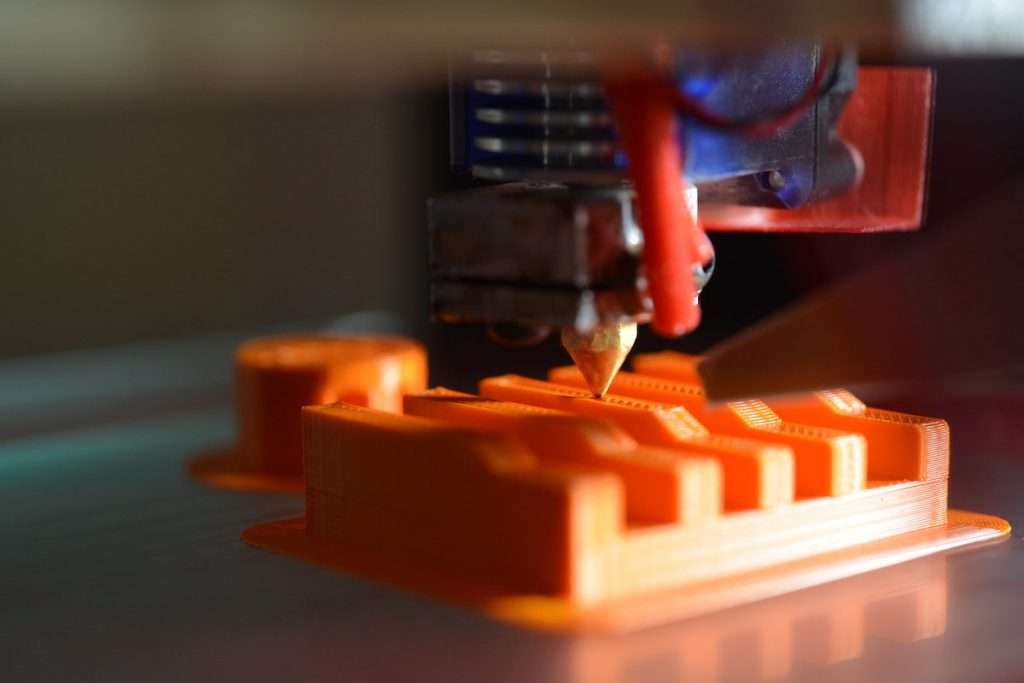
PLA (Polylactic acid)
The first filament type we’re looking at today is PLA, which stands for polylactic acid. Because it has a lower melting point and is more forgiving, this is probably one of the easiest filaments to work with.
PLA often gets overlooked and thought of as a beginner’s filament; however, the PLA family of filaments can produce good prints that can be used daily. One of the other benefits of PLA is that you can usually find the largest assortment of colors in this family.
PLA also tends to be the most affordable of the filaments; this can change, however, depending on the make of the printer. Usually, when you buy a 3D printer, the company that made it will send you a sample along with the printer.
PLA (polylactic acid) is commonly made from corn starch, cassava, or sugarcane. PLA is biodegradable and (supposedly) edible (though I somehow doubt that).
ABS (Acrylonitrile butadiene styrene)
Our second filament is ABS, which stands for acrylonitrile butadiene styrene. ABS is the same plastic that toys like Lego bricks are made of. The major benefits of ABS are still a wider variety of colors, higher tensile strength, and stiffness. This tends to produce a more durable part because ABS has a higher melting point and is more heat resistant than the PLA family.
PETG (Polyethylene terephthalate glycol)
The third filament on our list is PETG, which stands for polyethylene terephthalate glycol. It offers ease of printing like PLA but with additional strength like ABS. It has a lessened tendency to warp like ABS, and there are almost no odors or fumes. The benefit of PETG is its higher durability and strength compared to that of PLA, as well as its ability to withstand higher temperatures.
TPU (thermoplastic polyurethane)
Our last filament to look at today is thermoplastic polyurethane, better known as TPU. This type of filament has properties that make it flexible. It is great for things like watch straps, phone cases, and other items that need to bend or stretch without breaking their properties. Unfortunately, TPU is also prone to absorbing excess moisture and should be kept in a sealed bag with desiccant when not in use.
if you want even more tips, check out this video called “Guide to 3D Printing Filament! PLA ABS PETG TPU PEEK ULTEM” from the 3D Printing Nerd YouTube channel.
https://www.youtube.com/embed/Or1FP43zx3I?feature=oembedA video called “Guide to 3D Printing Filament! PLA ABS PETG TPU PEEK ULTEM” from the 3D Printing Nerd YouTube channel.
Frequently asked questions (FAQ)
Do you still have a question? Below are some of the most commonly asked questions about 3D Printing filaments.
Is it safe to consume PLA plastic?
Finally, as a pure substance, PLA is often regarded as food-safe; the polymer contains no hazardous compounds. However, colors or additives contained in PLA filament spools may not be food-safe.
What is the best 3D printer filament for beginners?
PLA is the best 3D printer filament for novices since it is simple. Nonetheless, with a little time, effort, and skill, most other 3D filaments may be mastered to create stunning and useful goods.
What is the strongest 3D filament?
According to several makers and reviews, polycarbonate is the strongest consumer filament available. When printed appropriately with an all-metal hot end and an enclosure, PC may produce incredibly high-strength objects.
Conclusion
We hope this guide helped you understand more about the different types of 3D printer filaments there. Here are some key takeaways:
- PLA has a large assortment of colors and is the most common filament.
- ABS ABS has a higher melting point than PLA
- PETG is highly durable and strong compared to that PLA and can withstand higher temperatures.
- TPU is great for creating flexible objects.
So what kind of filament are you planning on using? Let us know in the comment section, and if you want to learn more about 3D printing and modeling, check out our full 3D Design module here at the MakerHub. Thanks for reading, and never stop making.