I watched “How To Dominate AI Search Results (For Home Services)” from Breakthrough Academy because AI assistants are already rewriting how homeowners pick contractors. If you don’t appear in AI answers for service queries, your calls drop. 🔧
I’m not here to recap their slides. I’m here to give you the plan I actually run for home services so AI systems can cite you, prospects trust you, and your reporting doesn’t lie. I’ll keep it practical, evidence backed, and built around how models pick sources.

// My reaction
Yeah, that's the point
- Bold ledeShip an entity‑first build with clean NAP and service pages that cover price, process, risk, and locality so assistants can cite you.
- Bold ledeFeed assistants short summaries, safety notes, and focused FAQs instead of thin city–service spam.
- Bold ledeMark it up (LocalBusiness, Service, FAQPage, selective HowTo) and measure reality with a GA4 proxy and call tracking.
| Page Type | What it feeds in AI |
|---|---|
| Entity home | Business identity, NAP, categories, and brand confidence |
| Service page | Step-by-step, cost, risks, and process chunks assistants can cite |
| Location + service | Local signals: codes, seasonality, neighborhoods, proof you operate there |
| FAQ page | Short, citable answers to common queries |
| Policy/safety | Reduces risk; assistants lean on clear guarantees and safety callouts |
| Reviews on-page | Social proof and city/service reinforcement |
AI answers aren’t stealing your leads. Your pages just aren’t the best short answer yet. Fix the entity, feed the assistant, and instrument the funnel.
Do I need a page for every suburb?
No. Build location pages only where you have real, referenceable proof of work and local context. Otherwise strengthen your core service pages and GBP.
Should I add pricing if competitors don’t?
Yes. Ranges and minimums improve trust and make you more citeable. If the work varies, say why and show examples. National guides show wide ranges by type and permits, so framing “what changes the quote” is honest and useful.
Is schema alone enough to win AI answers?
No. Schema helps models parse your content, but you still need unique info gain, clear structure, and evidence. Google has also limited FAQ/HowTo rich results, so don’t expect a display boost from markup alone.
Do assistants actually care about NAP?
They reconcile your entity across sources. GBP’s rules require real‑world consistency on naming, address, and categories. Sloppy NAP makes you harder to cite confidently.
Can I put a tracking number on GBP without breaking NAP?
Yes—do it correctly. Keep a canonical business number and use a tracking number via porting or as configured primary/secondary so citations stay consistent while you capture attribution.
- “How To Dominate AI Search Results (For Home Services)” — Breakthrough Academy (YouTube) (https://www.youtube.com/watch?v=djemXIow-wQ)
- Google users are less likely to click when an AI summary appears — Pew Research Center (https://www.pewresearch.org/short-reads/2025/07/22/google-users-are-less-likely-to-click-on-links-when-an-ai-summary-appears-in-the-results/)
- AIO impact on CTR varies by citation and query — Seer Interactive (https://www.seerinteractive.com/insights/aio-impact-on-google-ctr-2026-update)
- FAQ/HowTo rich result changes — Google Search Central (https://developers.google.com/search/blog/2023/08/howto-faq-changes)
- RRP Rule for pre‑1978 paint — U.S. EPA (https://www.epa.gov/lead/lead-renovation-repair-and-painting-program)
- Seattle permits example — SDCI/Seattle (https://www.seattle.gov/documents/departments/sdci/codes/plumbingcode/2021seattleplumbingcode.pdf)
- Ship an entity-first buildA tight entity home, clean NAP, and service pages with price/process make you citeable in AI.
- Feed assistants the right chunksShort summaries, FAQs, and safety notes win snippets, not city–service spam.
- Mark it up and measure itLocalBusiness, Service, FAQPage schema + GA4 proxies + call tracking = reality check.
What AI assistants look for in service queries
AI systems try to return a short, trustworthy, locally relevant answer. Multiple studies show AI Overviews compress organic clicks unless you’re cited, and they often cite structured, evidential pages rather than just a homepage (Pew; Seer 2026; BrightEdge research). (pewresearch.org)
And yes, Google says AI increases higher quality clicks. Both can be true. Your job is to earn the citation, show real price and process, and measure calls like a hawk, not vibes. (Google Keyword blog). (blog.google)
That means they favor:
- Clear entities and NAP consistency. If your business identity is messy, you won’t get cited. Tie your name, address, phone, categories, and service area across site, GBP, and major listings. 📍 Google’s guidelines are explicit about real world representation and category accuracy (GBP guidelines). (support.google.com)
- Concise, step by step explanations of common jobs, with risks, tools, permits, and when to call a pro. Short summary up top, detail below.
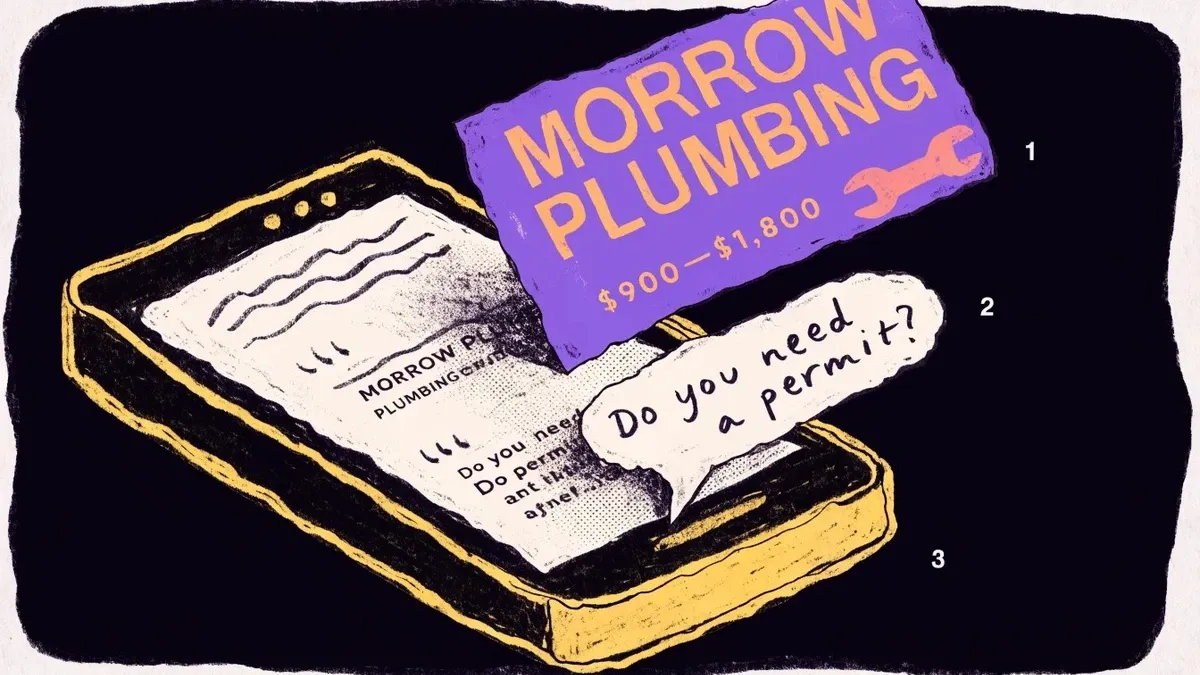
- Price and availability signals. Ranges, minimums, and what changes the quote. Don’t hide it behind “call for pricing.” 🧾 National guides put tank style water heater replacement commonly around $900–$1,800, with local variance; tankless jobs often run ~$1,400–$3,900+ (Angi 2026; HomeAdvisor 2025). (angi.com)
- Local context. Materials, weather, and code notes for your service area. If you touch pre 1978 paint, call out EPA RRP compliance (EPA RRP). If a permit is required (e.g., water heaters in Seattle), say so and link (Seattle Plumbing Code 502.1: permit required). (epa.gov)
- Citable structure. Headings, bullets, FAQs, and schema so chunks are easy to quote and verify. BrightEdge tracking shows AIO citations do not always mirror top organic, so make subpages quotable (BrightEdge). (help.brightedge.com)
If your page doesn’t answer what, why, how, cost, risk, and where, assistants grab someone else.
The build: pages and data you need this month
Ship these in this order. Ruthless focus beats bloated site maps.
1) Entity home (homepage or brand page)
- One clean, canonical NAP. Primary category. Service summary. Service area. Socials. Brand story in 100 words. Make this your entity home.
2) Service pages (one per core service) 🛠️
- What it is, symptoms/problems it solves, step by step process, time on site, warranty, “DIY vs pro,” risks, and a price range or minimum. Add 3+ job photos with short, descriptive captions. If the job often needs permits or inspections (water heaters, electrical), say it plainly and link to an authority.
3) Location + service pages (only for real areas you serve)
- Don’t clone. Add code/permits, seasonality, local materials, and two project blurbs with neighborhoods. Link to 2–3 relevant local orgs you actually work with.
4) FAQs and troubleshooting
- Make an FAQ page per service. 6–12 high intent questions with 1–3 sentence answers. Include safety and when to call a pro. Keep answers quotable.
5) Policies and safety
- Warranty, licensing, insurance, cleanup, and disposal. Assistants like explicit policy pages because they reduce risk and ambiguity.
6) Reviews with evidence 📞
- Pull 5–10 reviews per core service into service pages. Add a short owner reply that clarifies job type and city. Mark up correctly. Don’t fake locations.
7) Google Business Profile upkeep
- Primary + secondary categories, real services list with descriptions, booking link, Q&A seeded with top 5 questions (and answers), photos from actual jobs weekly.
8) Schema that matters
- LocalBusiness (or subtype), Service (with areaServed, offers/priceRange), FAQPage, HowTo (only when it’s safe), and Review/Rating. Use org sameAs for brand corroboration. Then test.
| Page Type | What it feeds in AI |
|---|---|
| Entity home | Business identity, NAP, categories, and brand confidence |
| Service page | Step by step, cost, risks, and process chunks assistants can cite |
| Location + service | Local signals: codes, seasonality, neighborhoods, proof you operate there |
| FAQ page | Short, citable answers to common queries |
| Policy/safety | Reduces risk; assistants lean on clear guarantees and safety callouts |
| Reviews on-page | Social proof and city/service reinforcement |
Telemetry that won’t lie to you
Clicks from blue links are flattening. Measure the stuff that maps to revenue.
- Build an AI displacement proxy. Segment branded vs unbranded calls and contact events in GA4 and trend them against impressions/CTR changes. Here’s my practical walkthrough: Track AI Search Traffic in GA4 - How to Build a Defensible Proxy (/blog/track-ai-search-ga4-proxy). 📊
- Spot check AI visibility weekly. Use the AI Visibility Checker to see if assistants cite you for top questions and which competitors show up (/tools/ai-visibility). 🤖
- Quantify what AI stole. Before rewriting pages, prove loss with a defensible method: AI Search Traffic Loss: How to Prove Displacement and Rebuild Clicks (/blog/ai-search-displacement-recapture).
- Schema audits at scale. Use the Schema Opportunity Analyzer to find missing Service/FAQ markup on money pages (/tools/schema-analyzer).
What to stop doing
- City service page factories with the same 400 words and a swapped city name.
- Fake offices or virtual suites to rank in places you don’t serve.
- “Call for pricing” everywhere. Give a range and what moves it.
- Blog spam that never maps to a service or a city.
- Image dumps with no captions or context. The model can’t cite a gallery.
AI answers aren’t stealing your leads. Your pages just aren’t the best short answer yet. Fix the entity, feed the assistant, and instrument the funnel.
Do I need a page for every suburb?
No. Build location pages only where you have real, referenceable proof of work and local context. Otherwise strengthen your core service pages and GBP.
Should I add pricing if competitors don’t?
Yes. Ranges and minimums improve trust and make you more citeable. If the work varies, say why and show examples.
Is schema alone enough to win AI answers?
No. Schema helps models parse your content, but you still need unique info gain, clear structure, and evidence.
- “How To Dominate AI Search Results (For Home Services)” - Breakthrough Academy (YouTube) (https://www.youtube.com/watch?v=djemXIow-wQ)
Takeaway: Home services that win in AI search look boring on paper, tight entity, clean NAP, service pages with price/process, local proof, and honest FAQs, but they get cited, called, and booked. Ship the build, then validate it with an AI visibility check and a GA4 proxy so your SEO and GEO decisions are grounded in reality, not vibes.
