I watched “Google's AI is Paying Money For Quality Content? | SEO + AI News 9.22” (https://www.youtube.com/watch?v=tBUp7rlGfoY) because if Google is testing payouts for AI answer citations or licensed use, your site’s structure and proof of originality instantly matter for both traffic and revenue 🔎. This is worth talking about for one reason: AI answers are already displacing clicks and if there’s a payout mechanism on top, you either qualify and track it, or you bleed quietly.
I’m not here to cheerlead rumors. I’m here to map the decisions that don’t age badly if this turns into a program with real terms.
- Treat “Google paying for AI answers” as a pilot risk you can prepare for without guessing any contract details.
- Eligibility: Be the source that’s easiest to cite with clean entities, extractable facts, durable authorship, and precise schema.
- Tracking: Prove AI inclusion and CTR displacement now so any payout (or lack of it) has numbers behind it later.
What’s actually on the table
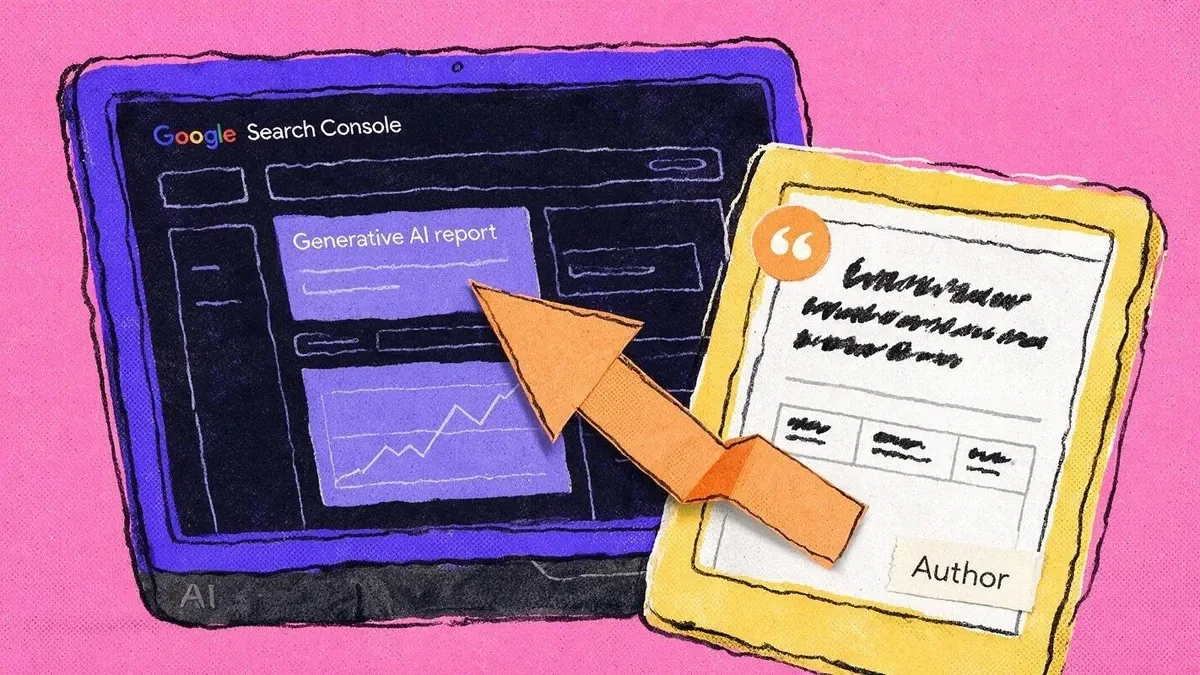
The SirLinksalot video tees up a simple question: could Google pay for quality content feeding AI answers, and what should we do today? According to Digiday reporting, Google is piloting a “pay‑per‑value” AI licensing program with an “AI contribution” earnings widget in Search Console; Google confirmed it as an early, learning program. Terms, eligibility, and payout math aren’t public. Digiday. (digiday.com)
Sources also show Google publicly signaling “new partnership models” across news and beyond. Google Public Policy and Google Search blog (tools and partnerships). (publicpolicy.google)
I’m taking the conservative stance: assume a limited, invite‑only pilot, evolving rules, and opaque payouts. Plan accordingly. Two realities are already true whether Google pays you or not:
- AI answers compress demand. Less room for blue links means fewer incidental clicks. Multiple datasets point the same direction, including Ahrefs’ estimate of a 34.5% lower average CTR for the top result when an AI Overview shows and later updates from Ahrefs suggest the effect may be larger but I haven’t personally validated the rerun. Ahrefs 34.5% study and Ahrefs update. Also see Amsive’s 700k‑keyword analysis of CTR declines and recent academic work on generative search impacts. Amsive and arXiv. 📉 (ahrefs.com)
- Citable structure beats prose. If your facts aren’t extractable, you don’t get referenced. And if you’re referenced but not clicked, you need another path to value.
Payments or not, the only rational move is to make your content more reference‑ready and your measurement airtight.
Do now
- Audit AI answer presence for top 50 queries
- Tighten schema + lead paragraphs on 10 URLs
- Start a citation log
- Expand to 50–100 pages with extractable facts
- Add dataset/FAQ modules where warranted
- Formalize monthly AI displacement reporting
Is Google actually paying for AI citations now?
Partly. There’s an invitation‑only pilot inside Search Console that pays when your page “significantly contributes” to an AI answer. Scope and payouts are limited and opaque.
How will I know if I’m eligible for payments?
Unknown. Treat it like an allowlist pilot. Build a site that’s easy to cite, monitor for outreach, and watch Search Console for any new panels.
Can I opt out of AIO without leaving Google Search?
Yes. Use the Search generative AI control to exclude your site from AIO/AI Mode/Discover. Training is separate—use Google‑Extended for Gemini training/grounding choices.
What if I get cited but not clicked?
Common. Shift value capture up‑funnel: brand mentions, email micro‑conversions, and structured offers in the target page. Tighten titles/snippets to protect CTR.
Will adding FAQ/HowTo schema bring the old rich results back?
No guarantee. Google reduced their display. The markup still helps machines understand your content, which matters for AI answers, but don’t expect the old visuals to return.
Assume a pilot. Act like it’s real. The same work—entity clarity, extractable facts, and clean measurement—wins whether or not checks ever arrive.
- SirLinksalot — Google's AI is Paying Money For Quality Content? | SEO + AI News 9.22
- Digiday — Google rolls out ‘pay-per-value’ AI licensing program
- Google Public Policy — Supporting the information ecosystem
- Google Search Central — Generative AI performance reports rollout
- Search Console Help — Search generative AI control
- Google Crawlers — Google-Extended robots.txt token
- Ahrefs — AI Overviews reduce clicks study
- Pew Research — Users are less likely to click when AI summaries appear
- Google Search Central — FAQ/HowTo changes
What content gets cited in AI answers
From live AI answers, repeated patterns show up:
- Canonical facts and definitions anchored to stable entities (people, organizations, products). Tight intros with one‑sentence definitions.
- Stepwise procedures with clear, ordered actions and minimal fluff.
- Small, sourceable stats. One number per claim, with the original source or your method described.
- Tight FAQs with one‑question/one‑answer formatting.
Technically, that means:
- Schema used correctly: FAQPage, HowTo, QAPage, Article, Organization, Product, Review, Dataset where appropriate. Use IDs, sameAs, and isPartOf to anchor entities. Markup still helps machines understand content even though FAQ/HowTo rich results were reduced starting in 2023 and later removed from Search (FAQ in 2026; HowTo earlier). I haven’t verified the 2026 timing firsthand so treat the horizon as shifting. Google 2023 changes and FAQ removal coverage. (developers.google.com)
- Authorship + provenance: Real author pages, last updated timestamps, method notes for stats/tests. 🧪
- Clean extraction: Short lead paragraphs, bulletable lists, one‑table summaries. Fast, cacheable, crawlable. 🛠️
If you want a step‑by‑step build to make pages citeable, I laid out formats and proofs here: /blog/build-content-ai-search and /blog/ai-search-get-cited-by-ai-overviews.
What I’d do this week
I’m not waiting on a press release. I’m doing three things that pay off either way.
1) Prove your AI inclusion and displacement
- Identify which pages/queries trigger AI Overviews or AI Mode and whether you’re cited. The new Generative AI performance report in Search Console shows impressions for AI Overviews and AI Mode; today it’s impressions‑only with dimensions like page/country/device not query‑level details. GSC help. (support.google.com)
- Track before/after CTR shifts on those queries. If you can’t show displacement, you can’t argue value later.
- Need a measurement plan? Start here: /blog/ai-search-displacement-recapture and /blog/track-ai-search-ga4-proxy. 📈
2) Make 10 pages “reference‑grade” by Friday
- Pick 10 evergreen URLs with impressions.
- Add a 2–3 sentence definitional lead and a one‑table summary. Keep claims atomic, cite originals.
- Fix schema. Add author, last updated, and a methods note where you assert numbers.
3) Stand up a triage workflow
- Map top questions to one page each; enforce extractable formats (definitions, steps, tables).
- Create a citation log: every time your brand/domain appears in AI answers, capture the query, SERP, timestamp, and answer text. 🧾
- If a payment program opens, you’ve got evidence ready. Until then, those same pages convert better.
If you want a ready‑to‑run plan tailored to payouts, I published these:
- Google Paying Publishers for AI Answers — What Publishers Should Do Now: /blog/google-ai-publisher-payments-playbook
- Google Paying Publishers for AI? 72‑Hour Triage & Readiness Playbook: /blog/google-ai-publisher-triage
How to measure without waiting for terms
If payments hinge on “quality” or “usage,” expect two buckets of proof you control today:
- Citation presence: Is your brand or URL named in the AI answer? Snapshot it. Time‑stamp it. Keep a ledger.
- Downstream value: Did branded demand, email signups, or assisted conversions hold steady as clicks fell? Tie those to the same queries and surfaces.
Google’s own knobs now help:
- Search generative AI control lets you include/exclude your site from AI Overviews, AI Mode, and generative features in Discover. It doesn’t affect model training; for that, use Google‑Extended. GSC control and Google‑Extended. (support.google.com)
- Generative AI performance reports in Search Console show AI surfaces impressions (Search and Discover). Helpful to spot where AIO or AI Mode triggers even if you don’t get detailed query data yet.
The takeaway
Treat the possibility of Google paying for AI answers as a risk‑managed opportunity. Make your pages easy to cite, prove your inclusion and displacement now, and keep your schema and authorship tight. If payments materialize you’re first in line, if they don’t you’ll still gain citations, trust, and cleaner funnels. That’s the work that compounds in SEO, GEO, and AI practice. 🔧📊
