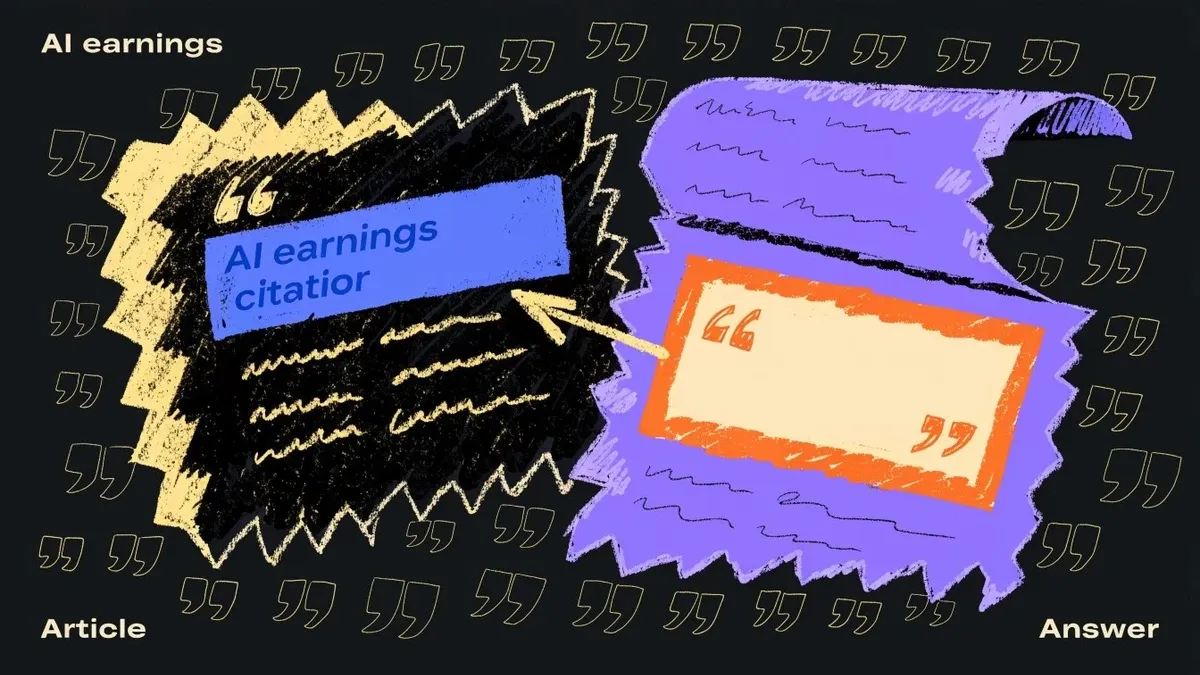
Barry Schwartz just put this on record: Google is paying some publishers for AI to use their content. Watch the roundup here: https://www.youtube.com/watch?v=uEueP77wRGk. This matters because it signals a pay-to-cite era for AI answers and a new kind of traffic arbitrage 🧭
I’m not guessing deal terms. They aren’t public. I’m here to help you react like an operator so you can figure out if you’re a fit, protect your rights, and measure real upside and downside now, not after your board asks what you did about it.

// My reaction
Operator mode engaged — take action now
What Barry actually said
- Barry reports that Google is paying some publishers for AI to use their content. That is the headline. Treat it as a pilot until confirmed otherwise. Coverage calls it the “AI contribution pilot,” tied to Gemini, AI Overviews, and AI Mode, with screenshots of a Search Console module showing “AI earnings.” See Digiday’s report and Barry’s write up, plus independent coverage with the same screenshots: Digiday, Search Engine Land, and Search Engine Journal. (digiday.com)
- He also flags a weird ranking window, with noticeable movement around September 4, 2026 and reports of a reversal around September 13, plus fresh volatility on September 15. If your rankings wobbled, line up your dates and check whether AI answer units expanded in your space. See Barry’s posts: Sept 4 → Sept 13 reversal and Sept 15 volatility. (seroundtable.com)
- Ads and GA notes were included, useful housekeeping while you sort the AI piece. See SERoundtable’s Sept 14 forum recap. (seroundtable.com)
Point is, Google is testing both supply via publisher licensing and presentation via answer units. You can’t control their roadmap. You can control your readiness.
- SignalGoogle is piloting payments to some publishers for AI usage of content (an “AI contribution” program).
- Immediate riskAI answers displace clicks before licensing reaches you.
- Move nowSort legal/policy, measure AI visibility vs. ranking changes, and rebuild pages to be answer‑first and citeable.
Your 72 hour triage and readiness plan
Here’s what I’d do this week, no fluff, just steps.
1) Policy and rights: get your stance on paper
- Publish or update your AI usage policy and Terms. Spell out what rights you grant or don’t, preferred licenses, and how to contact you for deals. If you’re in News or Discover, raise priority. 🧯
- Review robots and meta signals. Confirm your Search generative AI control which affects AI features in Search vs Google Extended which controls training and some grounding in Gemini and Vertex. They’re different knobs, set them on purpose not vibes. Official docs: Search generative AI control and Google’s Google-Extended announcement. (support.google.com)
- Centralize contacts for licensing. Legal, Biz Dev, SEO on one alias that won’t dead end.
2) Measure whether AI is already replacing you
- Baseline AI presence this week. Track AI Overviews and AI Mode impressions, where you’re cited, and where you’re not. If you’ve got internal tooling, great. If not, stand up a lightweight check and log evidence with screenshots 📷 The new Search Console Generative AI performance reports show impressions for AI Overviews and AI Mode, but they don’t show clicks. Start there, then corroborate with SERP captures. Docs: Search Console help and the Search Central announcement. Also note coverage of a logging dip bug Google acknowledged. Coverage. (support.google.com)
- Separate ranking volatility from answer displacement. If position holds but clicks fall, AI answers likely stole above the fold attention.
- Build a watchlist of money pages and FAQ intents. Capture signed in and signed out SERPs and note answer unit types.
- Helpful primers and tools:
- AI Visibility Checker — /tools/ai-visibility
- AI Search Traffic Loss: How to Prove Displacement and Rebuild Clicks — /blog/ai-search-displacement-recapture
- Google AI Reports: Measure Displacement Before You Change Pages — /blog/measure-ai-displacement-reviews-links
3) Make pages citeable and extractable
- AI systems pick short, definitive, attributed statements. Add answer first summaries at the top. Put the one sentence answer, the formula, or the stat in plain English first, details after 🧰
- Mark it up. Use FAQPage, HowTo, Product, Organization, and cite your sources. Include unique info gain like original numbers, methods, or named experts. Thin rewrites won’t get picked or paid.
- Start with 10 revenue relevant pages and refactor them this week.
- How to do it fast without fluff:
- Build Content for AI Search: Answer First, Citeable, and Extractable — /blog/build-content-ai-search
- SEO Ranking Factors Now: Prioritize Info Gain and Citation Ready Pages — /blog/seo-ranking-factors-info-gain
4) Decide your licensing posture and thresholds
- Draft a one pager. Define acceptable attribution, link requirements, content scope like full text vs snippets, analytics data access, audit rights, termination and opt out, and rate basis like per answer, per 1K answers, or monthly floor 🧾
- Map rights across brands and syndication. Know what you can grant. If you don’t control image or data rights, note exclusions.
- Identify your counterparties. Google partnerships, Search relations, and who will negotiate. Put names and emails in the doc.
5) Reporting and ops
- Add a weekly AI SERP share block to your SEO report. Track percent of queries with AI answers, your citation rate, CTR deltas vs classic blue links, and notable query examples 📊
- Annotate the September window Barry flagged, specifically September 4, 13, and 15, 2026, in your reporting. Barry’s posts and here. (seroundtable.com)
- Stabilize analytics before you compare week over week. Filter noisy parameters, watch for logging bugs, and fix favicon and brand elements that swing CTR. If you need a setup reference:
- Track AI Search Traffic in GA4 — How to Build a Defensible Proxy — /blog/track-ai-search-ga4-proxy
- Fix Favicons and Protect Brand CTR — /blog/fix-favicons-protect-ctr
What’s uncertain and how to act anyway
- Who’s in the first wave. Unknown. Reports describe an invitation only pilot with dozens of sites across categories. Digiday. (digiday.com)
- How rates are set. Opaque. Coverage frames it as pay per value based on significant contribution, not every citation, with AI earnings shown in a Search Console widget after you accept terms. Search Engine Land and Search Engine Journal. (searchengineland.com)
- Will payments improve referral traffic. Unknown. Plan for license-without-clicks. That aligns with how AI answers reduce click through in many scenarios. Measure and hedge with branded demand capture, email and SMS, and above the fold conversion blocks where you still get visits. For measurement context, see Google’s own Generative AI performance docs which track impressions only. Help. (support.google.com)
- Where the controls live. Mixed. The AI earnings widget relates to the pilot, the inclusion toggle lives separately under the Search generative AI control and does not control model training. Training and grounding limits are governed by Google-Extended. (support.google.com)
Why this matters for SEO and media ops
- The revenue model for answers is shifting. Clicks may convert into licenses or disappear.
- If you’re not measuring AI visibility, you can’t prove displacement or price a deal. If your content isn’t citeable, you won’t get paid or credited even if you should.
- This is operations that is policy, analytics, and content engineering, not a hot take. Do the boring work now so you’re not negotiating blind later 🔧🧮
Quick links
Google Paying Publishers for AI? 72‑Hour Triage & Readiness Playbook — /blog/google-ai-publisher-triage
Measure now
AI Visibility Checker — /tools/ai-visibility
Rebuild traffic
AI Search Traffic Loss: Prove Displacement & Recapture — /blog/ai-search-displacement-recapture
Make it citeable
Build Content for AI Search — /blog/build-content-ai-search
Did Google confirm it’s paying some publishers for AI answers?
Yes — coverage cites an “early‑stage” AI contribution pilot paying when content “significantly contributes” to answers, with a Search Console module and opt‑out (Digiday; Search Engine Roundtable).
If I’m cited in an AI answer, do I get paid?
Not by default. Reports say payouts depend on “significant contribution,” not every visible citation (Digiday).
Does the new Search control stop AI training?
No. The “Search generative AI control” affects AI features in Search. Google‑Extended governs training (and some grounding) across Gemini/Vertex. Different switches (Google Help).
Was there a confirmed ranking update around Sept 4/13/15?
No official confirmation. Barry documented a drop around Sept 4, reversals around Sept 13, and renewed volatility Sept 15 via community data (SERoundtable).
Takeaway
Google paying publishers for AI isn’t theoretical anymore, it’s moving even if the math is black box. Act like you’ll be asked to the table while protecting downside if you’re not. Measure AI displacement, engineer pages to be cited, and get your licensing posture straight. That’s how you keep control of your SEO, GEO, and AI program while the ground shifts, with receipts not vibes 🔎🧰📊
- Barry Schwartz — It’s New 9/14: Google paying publishers for AI using content, weird Google update, Google Ads & GA (YouTube)
- Google “AI contribution” pilot coverage — Digiday
- SERoundtable summary of the AI contribution pilot
- Google Public Policy: supporting the information ecosystem
- Google Search Console Help: Generative AI performance report
- SERoundtable: Sept 4/13/15 volatility coverage
