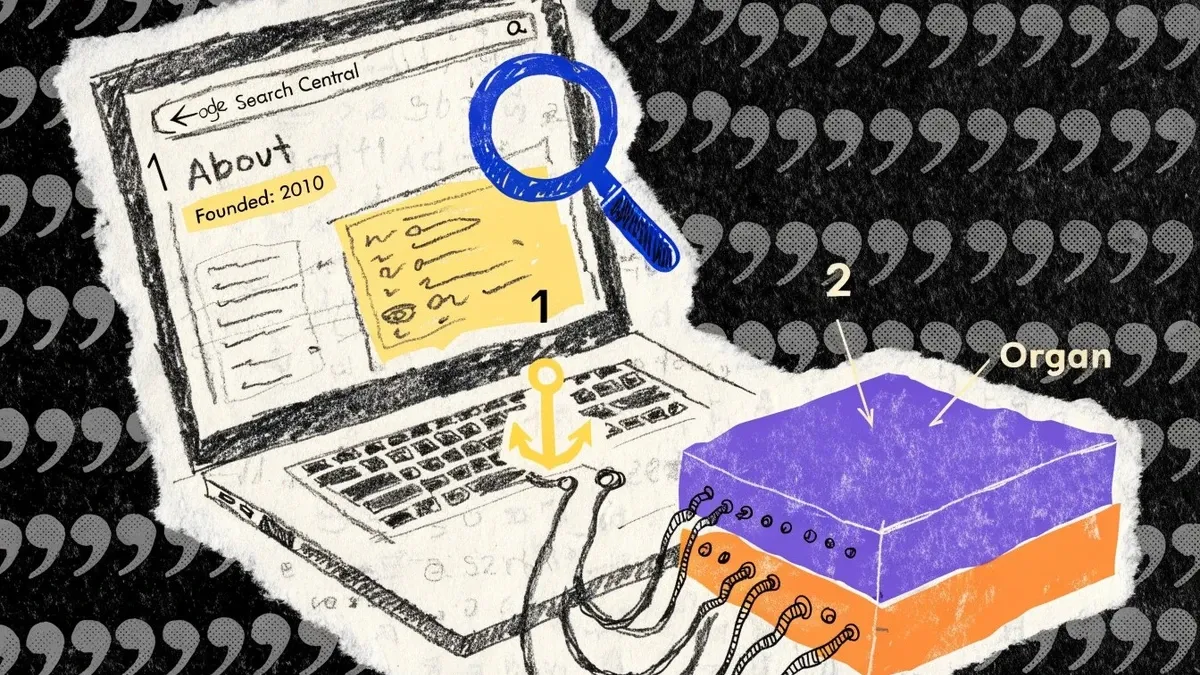
Victorious just dropped “Technical SEO for AI Search: What to Keep, Start, and Stop Doing” (https://www.youtube.com/watch?v=s151KHu6Cc0). It’s worth talking about because AI answers still cite and summarize from the open web and only from pages that are crawlable, indexable, and machine-readable. That’s not theory; Google’s docs say supporting links in AI Overviews/AI Mode come from indexable, snippet‑eligible pages, not magic markup or hacks (Google: AI features and your site). 🔧 (developers.google.com)

// My reaction
Excited reaction to the new video release
I’m not here to recap their video. I’m giving you the keep/start/stop plan I actually run on mid-market and enterprise sites. Short, opinionated, and focused on content extraction and entity integrity, because that’s what makes you citeable. If you want more context on where this is all going, I covered the broader play here: /blog/seo-prep-2027-citeable-extractable.
- Keep: crawl hygiene, canonical correctness, internal link signals, clean HTML, non-broken feedsThe boring stuff still controls what gets crawled, cached, and cited.
- Start: entity mapping, schema coverage beyond Article, source-of-truth pages, extractable patternsModels need consistent, machine-readable facts across the site.
- Stop: over-templated junk, fragile JS-dependent content, decorative schema, thin author pagesAnything that hides facts or fakes authority will get ignored.
| Keep (do more) | Start (add now) | Stop (kill) |
|---|---|---|
| Canonical hygiene, internal linking | Entity pages, rich schema, evidence | Decorative schema, JS-gated facts |
Do I need to mark up everything with schema?
No. Mark up what’s material to your entities and users. Depth over breadth. There’s no special markup for AI Overviews or AI Mode.
Will this make ChatGPT or Perplexity cite me?
There’s no switch. Clean facts, consistent entities, and extractable patterns raise your odds across assistants that ground in the open web.
Is speed still a ranking factor here?
Speed reduces crawl waste and abandonment. Faster pages also lower the chance that render-time fetches drop key facts.
- Google Search Central: AI Overviews and AI Mode (appearance and eligibility) (https://developers.google.com/search/docs/appearance/ai-features?utm_source=openai)
- Google Blog: Generative AI in Search (AIO launch and expansion) (https://blog.google/products-and-platforms/products/search/generative-ai-google-search-may-2024/?utm_source=openai)
- Google Blog: AI Search driving more queries and higher-quality clicks (https://blog.google/products-and-platforms/products/search/ai-search-driving-more-queries-higher-quality-clicks/?utm_source=openai)
- Bing Webmaster Tools: AI Performance report (https://www.bing.com/webmasters/help/ai-performance-9f8e7d6c?utm_source=openai)
- Google Search Central: Sitemaps lastmod guidance (https://developers.google.com/search/docs/crawling-indexing/sitemaps/build-sitemap?utm_source=openai)
- Google Search Central: Robots.txt vs. indexing (https://developers.google.com/search/docs/crawling-indexing/robots/intro?utm_source=openai)
- Google Search Central: Consolidate duplicate URLs (rel=canonical) (https://developers.google.com/search/docs/crawling-indexing/consolidate-duplicate-urls?utm_source=openai)
- Google Search Central: Dynamic rendering is deprecated (https://developers.google.com/search/docs/crawling-indexing/javascript/dynamic-rendering?utm_source=openai)
- Google Search Central: March 2024 core update and spam policies (scaled content abuse) (https://developers.google.com/search/blog/2024/03/core-update-spam-policies?utm_source=openai)
- FTC: Consumer Reviews and Testimonials Rule (https://www.ftc.gov/business-guidance/resources/consumer-reviews-testimonials-rule-questions-answers?utm_source=openai)
- HTTP Archive Web Almanac 2024: Structured Data (https://almanac.httparchive.org/en/2024/structured-data?utm_source=openai)
- Google Search Central: Crawlable links and anchor text (https://developers.google.com/search/docs/crawling-indexing/links-crawlable?utm_source=openai)
- Screaming Frog SEO Spider pricing (https://www.screamingfrog.co.uk/seo-spider/pricing/?web=1)
- JetOctopus pricing (https://jetoctopus.com/pricing/)
- Sitebulb licensing info (https://support.sitebulb.com/en/articles/9483130-how-to-upgrade-to-a-paid-sitebulb-license?utm_source=openai)
- Perplexity Pro price watch (third-party) (https://subkept.com/price-hikes/perplexity-pro/?utm_source=openai)
Why this is worth your time
AI Overviews didn’t stay a U.S. experiment. Google launched AIO nationally on May 14, 2024 and expanded to 200+ countries/territories and 40+ languages by May 20, 2025 (Google I/O 2024; Expansion update). Executive remarks in 2025 pegged monthly users at ~1.5B in Q1 and ~2B in Q2 (Alphabet Q1 2025 remarks; Alphabet Q2 2025 remarks). And they only show supporting links from pages that are indexable and snippet‑eligible (Google: AI features and your site). (blog.google)
Microsoft’s playing too. Bing’s AI Performance report shows your Copilot citations and grounding queries (Bing Webmaster Tools: AI Performance). Treat AI answers as a hostile API that only accepts precise, consistent facts. Read this primer if you need a refresher on how retrieval works: /blog/ai-search-ir-primer. 🧭 (bing.com)

// My reaction
Frustrated reaction to inconsistent facts being rejected
Keep: the fundamentals still compounding
- Crawl control: set robots.txt to avoid crawl waste, but remember robots.txt doesn’t prevent indexing; use noindex (and don’t block the page) if you want it out of Search (robots.txt intro, noindex). (developers.google.com)
- Canonical and duplication: one canonical per content idea. rel=canonical is a hint, not a command; ship self‑referential canonicals on the chosen URL and keep other signals consistent (consolidate duplicates, rel=canonical guidance). (developers.google.com)
- Internal links carry meaning: descriptive anchors on crawlable <a href> links help discovery and understanding (crawlable links + anchors). Hubs link down; spokes link up. Two hops to anything that matters. (developers.google.com)
- Sitemaps that reflect reality: include only indexables; split by type and freshness; keep lastmod accurate (Google uses it if it “consistently matches reality,” and ignores priority/changefreq) (build a sitemap, sitemaps lastmod clarification). (developers.google.cn)
- Clean HTML first: prefer server‑rendered or static HTML for core facts; dynamic rendering is a deprecated workaround (dynamic rendering is a workaround). If JS paints essentials, pre-render them. (developers.google.com)
Start: AI-search-specific moves
- Entity inventory: list your people, products, services, locations, programs, certifications. Map each to one source‑of‑truth URL. No exceptions. I outline this pattern here: /blog/seo-prep-2027-citeable-extractable.
- Organization identity: publish a single, stable About/Entity page with legal name, alternates, founding date, leadership, contact, and authoritative sameAs. If you’re public, include IDs that prove reality (e.g., D‑U‑N‑S). Keep this consistent across the site and profiles.
- Schema that expresses facts, not vibes: use Organization, Person, Product/Service, FAQ, HowTo, Review, Event only where content supports it. Fill factual properties (identifiers, brand, gtin/mpn, manufacturer, address). Don’t spray half‑empty types. For context: JSON‑LD appears on ~41% of pages in 2024 (and ~43% of homepages in 2025); Open Graph ~64% (2024); Microdata ~26% everyone’s marking up, clarity wins (Web Almanac 2024: Structured data; Web Almanac 2025: SEO). (cdn.httparchive.org)
- Evidence trails: real author bios, credentials, and consistent bylines. Link authors to the Organization and to their external profiles. If you claim a stat, cite the primary source in‑body. Google has stated links in AI experiences can drive “higher‑quality” clicks (Google blog; Search Central post). (blog.google)
- Extractable patterns: put specs in repeatable places a key facts table, consistent headings, bullet summaries. Avoid numbers locked in images or JS.
- N‑of‑1 pages: only ship separate “service in city” or variant pages if they’re materially different with unique evidence (photos, permits, SKUs). Otherwise, consolidate. Google’s March 2024 update targets scaled content abuse don’t mass‑template fluff (March 2024 core + spam policies). (developers.google.com)
Use tooling where it saves hours (pick what fits your stack and budget):
- Screaming Frog SEO Spider is a strong baseline crawler; paid license is £199 per user/year (pricing). (screamingfrog.co.uk)
- Sitebulb (desktop) and Sitebulb Cloud offer visual audits; paid plans exist confirm current pricing at checkout (Sitebulb FAQs). (sitebulb.com)
- JetOctopus (SaaS) handles large sites; current public pricing lists Pro at $689/mo ($549/mo annual) and Ultra at $1,369/mo ($1,089/mo annual) check the page for your region and billing cycle (JetOctopus pricing). (jetoctopus.com)
- For assistant-side checks, I run periodic prompts and log citations across Google, Bing, and Perplexity; Perplexity Pro is $20/month or $200/year as of Oct 2026 (Perplexity Help Center). 🔍 (perplexity.ai)
If you’re testing how AI surfaces your work, this helps: /blog/google-ai-overviews-desktop-seo.
Stop: habits that block extraction
- Decorative schema: slapping Article on everything, empty FAQ, or fake reviews. Aside from being useless, fake reviews are now an FTC enforcement risk with civil penalties (FTC Consumer Reviews & Testimonials Rule Q&A; e‑CFR Part 465). 🛑 (ftc.gov)
- JS‑gated essentials: if titles, copy, or prices rely on client‑side fetches that sometimes fail, expect misses in headless fetch and delayed rendering.
- Over‑templating: 500 “best X for Y” pages that swap a noun are classic scaled content abuse. Consolidate or add unique, verifiable info (March 2024 core + spam policies). (developers.google.com)
- Fragmenting one topic across 10 URLs: put the canonical answer on one page and support it with related but non-overlapping pages.
Field workflows I actually run
- Weekly crawl: capture indexables, canonicals, 404/5xx, hreflang, and JS-render diffs. Snapshot deltas.
- Entity drift watch: diff About/Org facts against top directory/profiles every month. Fix mismatches.
- Schema diff: validate types and properties on templates after each deploy.
- Snippet sanity: ensure titles, H1s, intro paragraphs contain the entity and the claim in plain text.
- Evidence capture: add 2-3 first-party proofs per key page each quarter (photos with EXIF, PDFs, awards, permits, changelogs).
If you need a deeper rubric, my SEO Audit service documents this into a punch list you can work through sprint by sprint (/services/seo-audit).
Measure the right outcomes
- Citations in AI answers: periodically prompt major assistants with factual queries your page answers. Save outputs and links when you’re cited. Expect variance; you’re looking for trend, not perfection.
- Coverage checks: verify your source-of-truth pages are crawled, indexed, and cached correctly. Broken cache = broken extraction.
- Consistency audits: sample 10 key facts (price, SKU, address, leadership name) and confirm they match across site, schema, and major profiles.
- User-side KPIs: track assistive traffic proxies brand query volume, direct traffic lift, and assisted conversions after evidence updates. It’s imperfect, but movement here plus stable crawl health is a strong signal. 📈
| Keep (do more) | Start (add now) | Stop (kill) |
|---|---|---|
| Canonical hygiene, internal linking | Entity pages, rich schema, evidence | Decorative schema, JS-gated facts |
FAQ
Do I need to mark up everything with schema?
No. Mark up what’s material to your entities and users. Depth over breadth. Half-filled types do nothing.
Will this make ChatGPT or Perplexity cite me?
There’s no switch. But clean facts, consistent entities, and extractable patterns raise your odds across assistants that pull from the open web.
Is speed still a ranking factor here?
Speed still reduces crawl waste and abandonment. Faster pages also reduce the chances that render-time fetches drop key facts.
The takeaway
Keep the crawl and canonical basics tight, start expressing your entities with verifiable facts and stable patterns, and stop anything that hides or fakes those facts. Do that and you become citeable in AI answers and more resilient in search, which is exactly how I’d run SEO for teams that need results and not theater. It all loops back to SEO, GEO, and AI practice that earns trust through clean, extractable truth.
