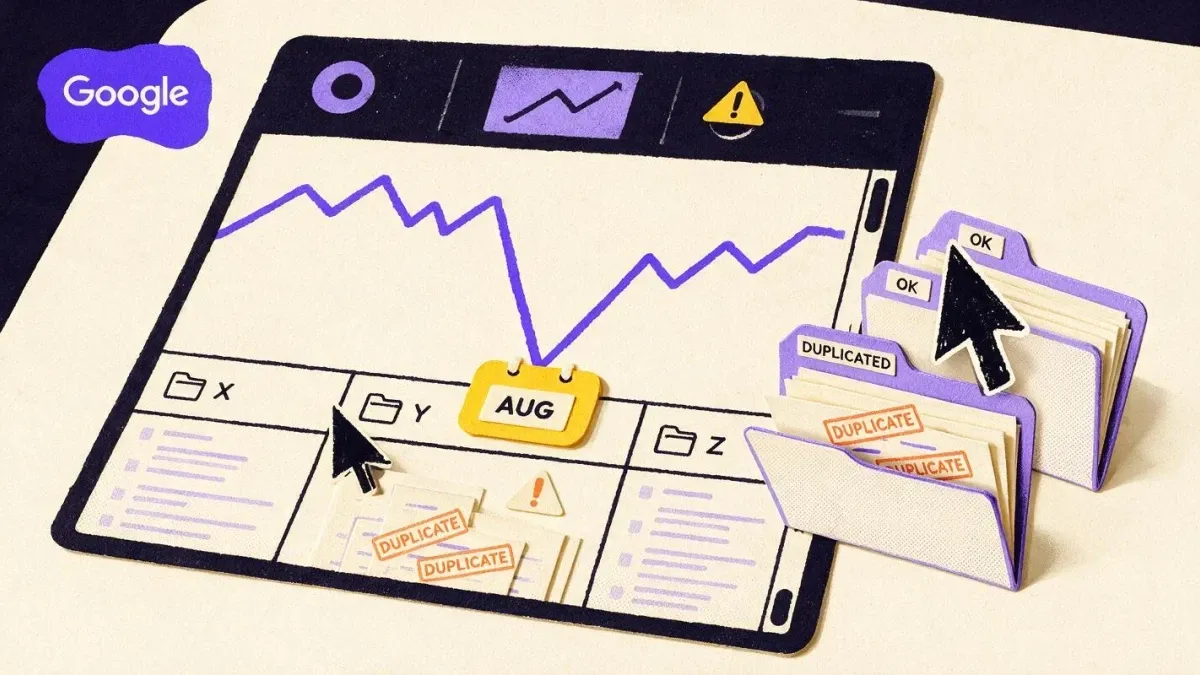
I watched “Google’s August 2026 Spam Update: What to check if rankings dropped” from Espial Solutions (https://www.youtube.com/watch?v=vhy6DNFtfy8). It’s worth talking through because plenty of legit sites ate volatility, and the smartest move now is a clean, pattern-based check-up — no theatrics. 🧭
I’ll show you the exact checks I run for clients when a spam update clips rankings — what’s signal, what’s noise, and what to fix first. I’m not guessing at causes. I’m isolating patterns I can prove.
If you took a hit, here’s how I approach the first 72 hours.
- Stabilize firstConfirm timing, isolate segments, don’t redeploy blindly
- Find repeatable patternsDirectories, templates, query classes — not anecdotes
- Cut risk fastNoindex thin, deprecate spammy sections, de-tune aggressive linking
- Rebuild trust signalsIntent satisfaction, clarity, schema, and brand corroboration
What matters and what doesn’t
The update label is less important than the pattern it punished. Your job: prove what moved, where, and why. Stabilize first, then act.
- Don’t chase day-to-day swings. Look at week-over-week deltas by directory and query class. 📉
- Don’t argue with averages. Segment: branded vs non-branded, money pages vs support content, UGC vs editorial.
- Don’t ship redesigns. Ship scoped fixes backed by data and user intent.
For added context and deeper checklists, I’ve documented my own audits here:
- My six-check audit for this update: google august 2026 spam update: six-check pattern audit
- Small-site playbook: August 2026 spam update: the five checks I’d run now for small sites
- If you suspect a Google-side bug, use this: google bugs seo triage: 72-hour playbook
How to isolate the damage fast
You need three answers within a day: where the drop concentrated, which page templates are implicated, and whether links or content patterns correlate. Keep it mechanical.
- 011) Confirm and segment
Align the traffic/rank drop with update dates, then split by country, device, page type, and query intent.
- 022) Directory and template map
Group URLs by /directory/ and CMS template to see which blocks fell together.
- 033) Query class review
Compare head vs long-tail, commerce vs info, YMYL vs non-YMYL; look for over-optimized clusters.
- 044) Crawl and coverage sanity
Fetch top losers. Check canonicals, noindex, robots, 4xx/5xx, and last-crawl recency.
- 055) Link pattern sniff test
Chart anchors and new-link velocity. De-tune sitewide/boilerplate links and obvious sponsorship footprints.
- 066) Thin/scaled content triage
Noindex or consolidate low-value listicles, near-dupes, or AI-spun summaries lacking original work.
What to fix first (the 2–3 moves that matter)
- De-risk obvious liabilities. If you’ve got mass-produced listicles, templated city pages with boilerplate, or coupon/affiliate fluff, noindex or remove them now. 🧹
- Tighten intent fit on pages that still deserve to rank. Rewrite to satisfy the query comprehensively. Trim filler. Add concrete proofs (data, procedures, constraints, sourcing).
- Clarify meaning for machines. Add precise schema where it adds disambiguation and eligibility — organizations, products, reviews, how-tos, FAQs. My quick helper: Schema Opportunity Analyzer. 🔧
- Make your internal links boring and useful. Reduce repetitive commercial anchors. Link to the canonical best resource.
Evidence you can trust (and what to ignore)
Trust:
- GSC query and page reports segmented by directory and device
- Server logs or crawl stats confirming Googlebot behavior changes 🗂️
- On-page diffs and deployment history around the drop window
Ignore:
- Third-party “visibility” screenshots with no URL- or query-level breakdown
- Global anecdotes that don’t match your site’s pattern
Recovery pacing and comms
This isn’t a same-day bounce-back. The right moves get you out of the penalty box; then you wait for reprocessing and re-crawls. That means:
- Weekly check-ins on fixed sections; not daily whiplash. ⏱️
- Track the right proxy metrics while AI surfaces siphon some intent. If you haven’t set this up yet, read: track ai search traffic in ga4 — how to build a defensible proxy.
- Document what you removed or noindexed. You will forget later.
How do I tell if content is “thin” or just short?
Thin fails to satisfy the query. Short is fine if it fully answers with unique value.
Should I disavow links after a spam drop?
Only if you have clear, concentrated toxic patterns you actually built or inherited.
Do I rewrite or redirect losers?
If the topic still matters and intent mismatch is fixable, rewrite. If it’s redundant, consolidate with a 301.
How long until improvements show up?
Expect weeks, not days. You’re waiting on crawl, index, and system re-evaluation.
Bottom line
Spam updates don’t “hate your site.” They punish repeatable patterns. Find yours, cut the risk, and make remaining pages unambiguously satisfying for the queries you want. Root cause, not vibes. 🧠
If you need help turning this into a focused sprint, see my Services or book a Website Teardown ($900). This is the part of SEO that overlaps hard with GEO and AI: you’re aligning intent, structure, and machine legibility so systems have no doubt what deserves to rank. 🔍
