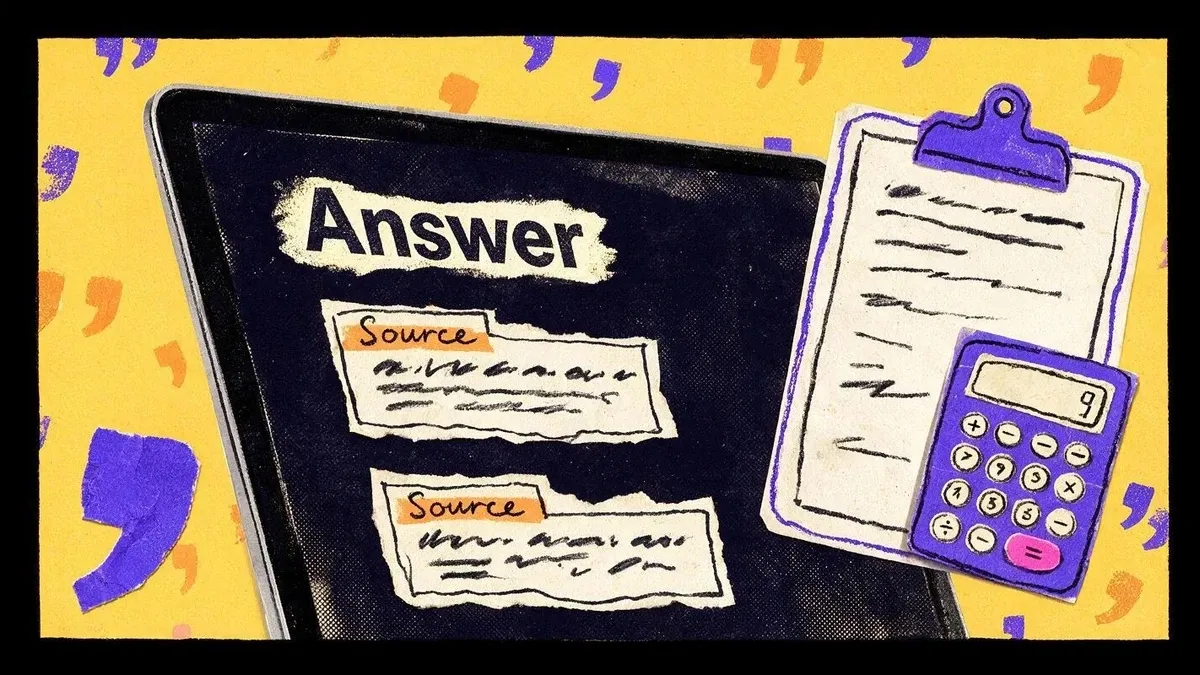
- Write for retrieval, not vibesTight entities, claim → proof, and extractable blocks beat fluffy “ultimate guides.”
| Workstream | What to ship |
|---|---|
| Week 1 | Map entities and claims per URL. Add “Answer” lines + source blocks on 5 priority pages. |
| Week 2 | Add schema tied to visible facts. Ship 1 small calculator or decision-tree. |
| Week 3 | Replace fluff with info-gain sections: comparisons, thresholds, failure modes, tradeoffs. |
| Week 4 | Measure shifts, collect citations, and brief one net-new “citation-first” article. |
Be quotable. Clear claims, tight entities, and sources beat 2,000 words of fluff every single time.
Will this bring back all lost traffic?
No. Some clicks are gone for good where the answer is complete in-SERP. The goal is to earn citations, brand lift, and higher-converting visits on tasks that still need a click.
- Google I/O: AI Overviews rollout (May 14, 2024)
- Google: AI features and your website
- Google: HowTo and FAQ rich result change (Aug 2023)
- Google Search updates (FAQ removal noted May 7, 2026)
- Elastic: Ranking, hybrid retrieval, and RRF
- Google patent: Contextual estimation of link information gain (2024)
- Bing Webmaster Tools: AI Performance
- Google: AI optimization guide (no special schema; no micro-chunking requirement)
- Google: Intro to structured data
- Microsoft: Expanding Copilot for Microsoft 365 pricing
- ChatGPT iOS: Plus pricing
- Google: Spam policies (generative AI manipulation)
- arXiv (2026): GEO measurement frameworks
- Google blog: AI features and “higher-quality clicks” claim
- CitedSpy: Gemini citation behavior
I watched “Go Beyond SEO: How to Build Content for AI Search” and it’s worth your time because AI answers are already siphoning clicks and if you’re not a cited source you’re background noise 👋

// My reaction
React: mind blown
This isn’t about traffic charts. It’s about making content that’s easy for machines to parse, verify, and quote. My work lives here lately, turning “nice articles” into citation-ready resources with measurable lift.
Why this matters for AI search
AI systems don’t read your whole blog, they chunk, embed, and score snippets, then they look for clear entities, claims with context, and explicit support, and if your page is vague or dressed like a brochure you’re invisible to retrieval 🧠
Two needles to move:
- Info gain — add original facts, comparisons, constraints, and numbers users can’t get from top 10 summaries. That’s what models quote.
- Evidence surfaces — make it trivial to extract claims plus sources. That’s what models trust.
- Write for retrieval, not vibesTight entities, claim → proof, and extractable blocks beat fluffy “ultimate guides.”
What I’d do this week (and why)
- Build a source block per key claim
Put the claim in one sentence, then cite the standard, law, study, SKU spec, or your first party data. Add Last reviewed with a date. LLMs reward clarity and provenance. 🔗
- Reformat for answer extraction
Turn buried answers into H2 or H3 with short paragraphs, lists, and step recipes. Add a brief Answer line before the detail. Clean chunks are easier to retrieve and harder to misquote 🧰
- Expand entity coverage on core pages
Name the entities your buyers and models expect, like brands, models, chemicals, places, certifications, failure modes. Use synonyms users use, but anchor them to canonical names. Entity coverage boosts recall in hybrid search and it reduces wrong matches.
- Add task-first utilities
Calculators, pickers, and checklists convert and get cited. Even a simple dimension to volume calc or dosing table gives you a quotable edge 🤖
- Tighten schema where it truly helps
Organization, Product, Service, HowTo, FAQPage used sparingly, and Review markup mapped to on page facts. Use schema to reflect reality, not to stuff keywords. If the field isn’t visible to humans, don’t fake it.
Measurement: prove AI displacement and recapture
You can’t manage what you don’t measure, so set baselines, then watch for shifts that align with AI answer surfaces across engines.
- Identify impacted queries and pages
Use Search Console to segment branded vs non branded and filter by informational intent. Track position stable queries losing CTR, that’s classic AI answer displacement.
- Monitor citations and answer presence over time
Log when your brand or page titles appear in AI answer citations, screenshots count. Pair with click curves to see if those wins translate.
- Quantify the business hit and rebound plan
Attribute lost sessions to affected queries and set a target for recapture from citations, snippets, and utilities. Attach owners and dates or it drifts.
Helpful guides and tools if you need a starting point:
- Read: AI Search Information Retrieval Primer on how systems chunk, embed, and choose cites 📈
- Read: AI Search Traffic Loss: How to Prove Displacement and Rebuild Clicks.
- Tool: AI Visibility Checker to track where you’re showing up in AI answers.
- Tool: Schema Opportunity Analyzer to find markup gaps tied to facts you actually show.
A compact build plan
| Workstream | What to ship |
|---|---|
| Week 1 | Map entities and claims per URL. Add “Answer” lines + source blocks on 5 priority pages. |
| Week 2 | Add schema tied to visible facts. Ship 1 small calculator or decision-tree. |
| Week 3 | Replace fluff with info-gain sections: comparisons, thresholds, failure modes, tradeoffs. |
| Week 4 | Measure shifts, collect citations, and brief one net-new “citation-first” article. |
Risks and what to ignore
- Chasing AI features without proof
If you can’t show displacement on named queries, don’t rewrite the site. Start with the 5 pages that actually drive pipeline.
- Schema cargo cults
Markup doesn’t fix thin content. It just describes it faster.
- Over indexing on FAQs
Since 2023, FAQ rich results have been limited. The pattern still helps machines parse, but don’t expect magical snippet wins. Use it to make extraction easy, not as a traffic lever.
Be quotable. Clear claims, tight entities, and sources beat 2,000 words of fluff every single time.
My checklist from this video
- One Answer line per user question on the page
- Evidence right next to the claim, not in a separate Resources graveyard
- Entities named and disambiguated
- Calculators or checklists where a decision needs numbers
- Minimal, truthful schema tied to visible facts
- Screenshots and logs of AI answer citations as proof of life 🗺️
Will this bring back all lost traffic?
No. Some clicks are gone for good where the answer is complete in SERP. The goal is to earn citations, brand lift, and higher converting visits on tasks that still need a click.
Takeaway
AI search rewards pages that are easy to cite and hard to replace. Build for retrieval, not vibes, with claims plus proof, structured answers, strong entity coverage, and small utilities that solve the task. That’s how you get quoted, not scraped, and that’s how you protect revenue as AI answers spread. Tie this into your SEO roadmap, measure displacement with discipline, and use AI where it speeds up sourcing and structure so your content earns citations in SEO and GEO contexts rather than sitting on page two hoping.
