Edward Sturm’s new video on Google’s September 2026 Spam Update is worth your time because it shows live SERP behavior as it happens, including Reddit’s AI translations bubbling up again — the kind of detail that forces operator decisions this week, not theory. Watch it: https://www.youtube.com/watch?v=26JS6SyJUmA 🎯

// My reaction
Reaction: surprised at live SERP behavior
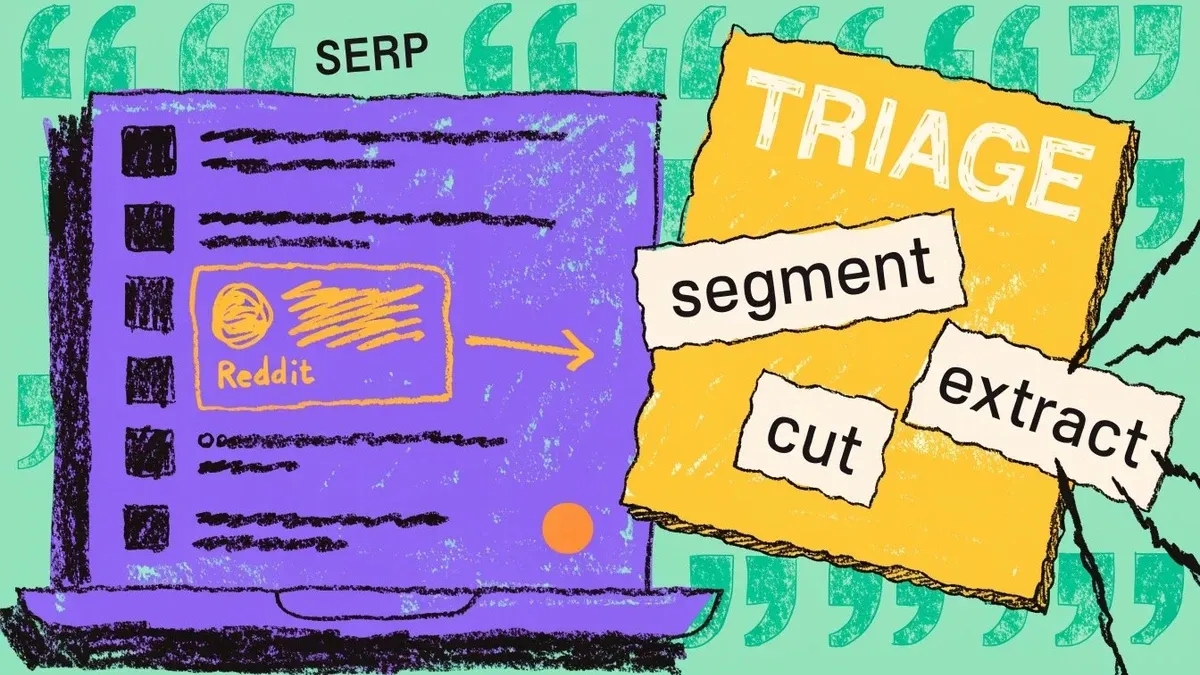
Here’s how I’m thinking about it. Google’s status page shows the update began on September 24 and applies globally, to all languages, with a rollout of up to two weeks. As of October 5 there’s no posted completion and volatility reports continued into Oct 1, so that’s the window that matters for triage, not the phase 2 chatter people are throwing around. Your job now is to segment the damage, cut what you can’t defend, and make your best pages extractable for both Google and LLMs, with receipts. status.search.google.com (status.search.google.com)
- Triage fast, by segmentSplit results by market, device, brand vs non‑brand, and query class before you edit anything.
- Cut what you can’t defendProgrammatic fluff, orphaned/tag stubs, AI rewrites without evidence — remove, noindex, or consolidate.
- Make winners extractableAdd sources, entity clarity, and clean structure so Google and LLMs can quote you directly.
What the video claims and what I’m watching
Edward says the update’s still biting and calls out Reddit’s AI translations surfacing again. I’m not treating any single pattern as universal since SERPs vary by market and query class, but the direction tracks with operator reports: thin or templated sections sliding, some UGC surfaces popping, and a lot of flux. 📉
Facts to ground this:
- Google’s status log shows the “September 2026 spam update” began 2026‑09‑24 09:15 PDT, is global and multilingual, and “may take up to two weeks” to complete; no completion is posted as of Oct 5. (https://status.search.google.com/incidents/XhUDXP7A67iHCD2kmbVu) (status.search.google.com)
- Community tracking shows two volatility spikes: Sep 25–27 and again around Sep 30–Oct 1 — “phase 2” is community shorthand, not Google’s term. (https://www.seroundtable.com/google-september-2026-spam-update-weekend-impact-42174.html, https://www.seroundtable.com/google-september-2026-spam-update-two-42209.html) (seroundtable.com)
- Observers reported Reddit AI translations reappearing in multiple non‑English markets around Sep 30 — that’s observation, not confirmation from Google. (https://www.seroundtable.com/google-september-2026-spam-update-two-42209.html) (seroundtable.com)
- Google’s spam updates use AI to catch more spam (shared at Search Central Live Europe). (https://www.seroundtable.com/google-search-spam-updates-ai-42226.html) (seroundtable.com)
- Google says it detects about 40 billion spammy pages daily. (https://www.google.com/intl/enus/search/howsearchworks/how-search-works/detecting-spam/) ([google.com](https://www.google.com/intl/enus/search/howsearchworks/how-search-works/detecting-spam/?utm_source=openai))
So here’s the plan I’d run now, focused on moves you fully control.

// My reaction
Reaction: ready to act
Triage: measure the hit before you swing
- Start in Search Console. Segment by page, query, country, and device; split brand vs non‑brand. Look where impressions fell first, clicks lag. 📊
- Check Discover vs Search. If Discover tanked harder, that’s a content mix and freshness problem more than spam only.
- Crawl stats and logs. Any slowdown, spikes in 4xx or 5xx, render issues. If Googlebot interest dipped, fix crawlability and render chains before content edits.
- Pull a top 50 query sample per affected template. Manually review the SERP. Who’s winning, forums, Reddit, vendor docs, publishers. Don’t guess, look. If UGC dominates, recheck your on page format against that intent.
- Reality check: yes, some sites reported 90-95% drops during the window without Manual Actions showing, that’s algorithmic not manual. (Example: https://www.reddit.com/r/SEO/comments/1wtnj5t/sudden95googlesearchtrafficlossin1day/) (reddit.com)
Cut or quarantine obvious liabilities
- Programmatic or thin sections. City and service mashes, what is X stubs, zero visit faceted pages, merge into hubs or noindex fast. 🧹
- AI rewrites with no first hand value. If it’s a remix of what already ranks, it’s dead weight. Either add unique evidence (photos, code, pricing, contracts, test results) or remove.
- Empty taxonomy pages. Tag or category archives that list near duplicates, convert to curated hubs with short summaries or noindex.
- UGC risks. Moderate hard, mark with rel="ugc" or "nofollow" where appropriate, tighten filters. If comments add nothing on affected templates, disable.
- Parasite or hosted pages. Thin rented subdomains or pages carry more risk. Prune.
If Reddit and other UGC are winning, adapt the format, not the spam
You don’t need a subreddit to learn from UGC mechanics:
- Lead with the actual question and common variants. Use clear H2 or H3s and short, scannable answers.
- Show receipts: timestamps, author context, outbound citations, conflict of interest notes. Opinions with provenance beat summaries.
- Add what worked or what failed sections and update them. LLMs quote specifics.
- Build one canonical Q&A hub per topic, fold duplicates into it. That’s how you earn model and human citations.
- If you see machine translated Reddit pages in your country, note query classes and replicate the helpful behaviors (specifics, updates), not the translation chaff. Users are already complaining about auto translated results quality. (https://www.reddit.com/r/google/comments/1qtlyn1/autotranslationongoogleiskindof_ruining/) (reddit.com)
| Symptom | First move |
|---|---|
| Non-brand pages down, brand stable | Cull thin programmatic + improve evidence on surviving hubs |
| Big hit on mobile only | Fix CWV layout shift (CLS), interstitials, ad density; check JS render/crawl chain |
| Specific template tanked | Compare top‑10. Match user intent, add primary sources, remove fluff |
| Traffic flat, impressions down | Tighten titles with intent terms/entities; improve internal links to hubs |
Why I’m not chasing “phase” confirmation
You can’t control it. You can control inventory quality, evidence, crawlability, and extractability — the things updates routinely reward.
Should we mass‑translate our whole site now?
Don’t. Google allows automation if quality is high, but scaled low‑value MT is a spam risk. Also, MT isn’t free — Google Cloud lists Translation LLM at $10/million characters and NMT Advanced around $20/million for common volumes (check current pricing: https://cloud.google.com/products/translate/pricing). If you localize, review natively and ship selectively.
Is “phase 2” an official stage of this update?
No. Google announced a single spam update with a rollout up to two weeks. “Phase 2” is community shorthand for the Sep 30–Oct 1 volatility spike (official log: https://status.search.google.com/incidents/XhUDXP7A67iHCD2kmbVu; coverage: https://www.seroundtable.com/google-september-2026-spam-update-two-42209.html).
Did we get a penalty?
Spam updates are algorithmic. If you had a manual action, you’d see it in Search Console’s Manual Actions report (policy docs: https://developers.google.com/search/docs/appearance/spam-updates; help: https://support.google.com/webmasters/answer/9044175).
Are AI/machine translations banned?
No. Automation is allowed if quality is high. Scaled, low‑value, unreviewed MT can violate spam policies (https://developers.google.com/search/docs/fundamentals/using-gen-ai-content and https://developers.google.com/search/docs/essentials/spam-policies).
What’s actually targeted this time?
Google rarely itemizes. Public guidance emphasizes scaled content abuse and user‑generated spam; Googlers also said they use AI to catch more spam (policies: https://developers.google.com/search/docs/essentials/spam-policies; remarks summary: https://www.seroundtable.com/google-search-spam-updates-ai-42226.html).
Discover vanished — is that the spam update?
Maybe, but Discover has its own volatility. Segment Search vs Discover in GSC before you overwrite content meant for Discover (examples of on/off behavior were logged around Sep 30: https://www.seroundtable.com/google-september-2026-spam-update-two-42209.html).
Cut the indefensible, strengthen the citeable.
Make your best pages extractable for AI and Google
- Add concrete evidence: pricing tables, process steps, warranty terms, owned photos, dated results. Models and Google pick up specifics.
- Strengthen entity clarity: use Organization, Product, FAQ, and Author schema where appropriate; align on page entities with the query. See our technical checklist here: https://yourdomain.com/blog/technical-seo-ai-search-plan 🧰
- Source yourself well: cite standards, docs, and studies with short quotes. Don’t hoard, outbound citations help.
- Use our Schema Opportunity Analyzer to spot missing entities and FAQ opportunities quickly.
- Run an AI visibility pass with the AI Visibility Checker and address zero citation pages first.
- If you need a deeper buildout, the playbook here maps keep, start, stop items for AI extraction: Technical SEO for AI Search: Keep, Start, Stop Doing
Takeaway
Don’t debate phases. Measure fast, cut what you can’t defend, and make your strongest pages easy for both crawlers and models to cite with proof that you actually did the work. That’s how you stabilize rankings now and set up GEO and AI visibility that compound, not just survive this one window. 🧭
