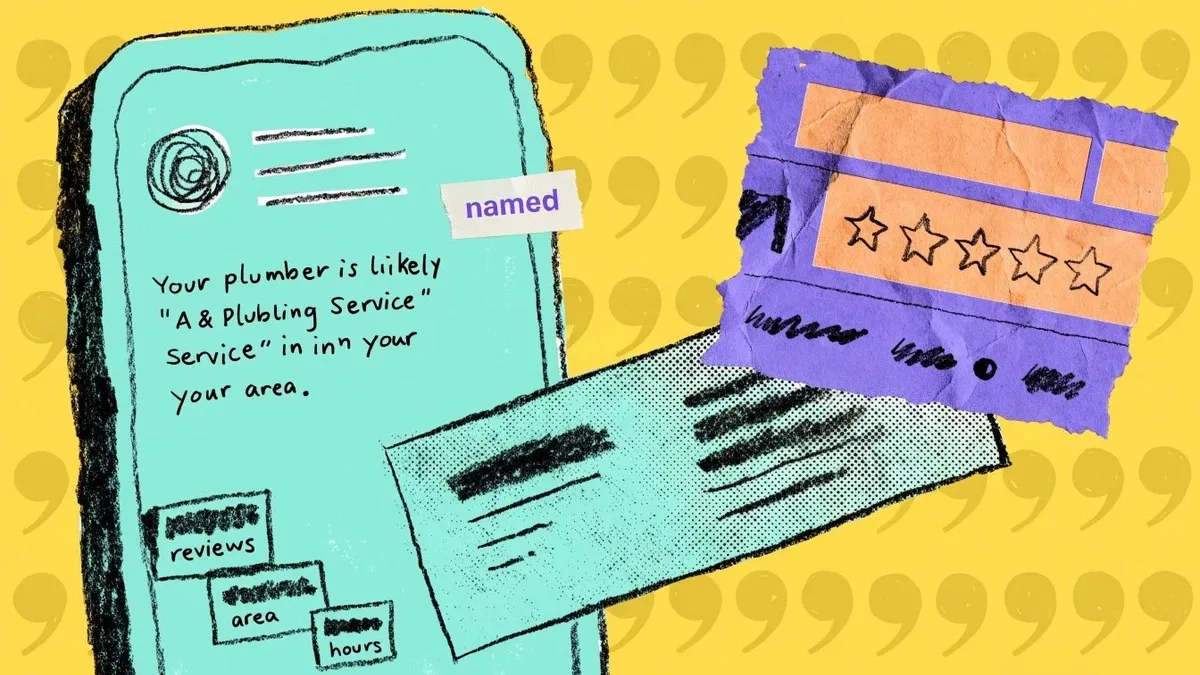
Duda just streamed Mapping Local AI Visibility: What Thousands of Searches Reveal on YouTube. 🗺️ Why talk about it? Because most AI-for-local chatter is vibes and screenshots, and this session claims scale across markets and intents. That matters if you care about actually getting named in assistants.
I’m not here to recap slides. I’m here to turn it into moves operators can run. I’ll keep it clean on numbers. BrightLocal’s published work is our external yardstick with 200,875 localized prompts across ChatGPT, Google AI Mode, and AI Overviews plus 1.9M citations and 1,342+ locations, which is enough to separate operator work from prompt theater. Source is in References.
- Local AI mentions come from entity clarity, not keyword stuffingExpect assistants to prefer businesses with clean, corroborated identities and service fit. Fix your primary entity, then earn mentions.
- GBP + web + data panels must agreeName, category, services, and geography alignment beat trick prompts. Treat your GBP as the structured source of truth.
- Measure by prompts, not just clicksTrack whether ChatGPT, Gemini, and others name you for high-intent tasks, by geo and query class.
- Local AI mentions come from entity clarity, not keyword stuffingExpect assistants to prefer businesses with clean, corroborated identities and service fit. Fix your primary entity, then earn mentions.
- GBP + web + data panels must agreeName, category, services, and geography alignment beat trick prompts. Treat your GBP as the structured source of truth.
- Measure by prompts, not just clicksTrack whether ChatGPT, Gemini, and others name you for high-intent tasks, by geo and query class.
Why this matters for operators
AI assistants are now answer engines. They don’t rank ten blue links. They name two or three providers and move on. If you serve a real market, your funnel now includes one question that should keep you honest: does the assistant even know I exist 🤖
The Duda session points at thousands of searches across locations and intents. Even if you don’t buy every conclusion, the framing tracks with operator reality and BrightLocal’s public study. Treat local AI visibility as an entity and coverage problem, not a title tag contest. Fix identity first, then coverage, then content. In that order.
| Signal/Input | Why it matters |
|---|---|
| GBP primary category | It sets your relevance prior; assistants inherit this mapping. |
| Service pages with clear facts | Assistants need extractable details to justify mentions. |
| Consistent NAP + duplicates closed | Ambiguity suppresses recommendations. |
| Trusted aggregator coverage | Fills gaps when your site is weak or new. |
Assistants prefer certainty. Clean entities, aligned GBP data, and extractable facts outperform clever prompts and content volume.
If I rank in Google Maps, will assistants name me?
Not reliably. Independent data shows a tracked business appears in 66% of Maps checks but only 32–38% on AI surfaces. Different systems, different selection logic.
Do I still need schema if Google killed some rich results?
Yes for understanding, no for eye candy. Use accurate LocalBusiness, Organization, Service, and FAQPage where valid. Don’t expect FAQ UI; expect machines to parse your facts.
Does Yelp matter if my GBP is strong?
Yes. Assistants cite GBP heavily, but Yelp is also a top source — and it now licenses data to OpenAI. Complete your Yelp and core industry citations.
How do I measure “AI assistants local search” wins without fake certainty?
Track brand mentions in top‑3 recommendations for a fixed prompt set by geo. Repeat runs on the same models, log sources cited, and tie changes to calls, messages, and bookings.
Can I juice reviews to trigger more local AI recommendations?
Don’t. The FTC bans fake reviews and Google’s GBP policy can restrict you for fake engagement. Ask real customers for specific, honest feedback that includes service and city details.
- Duda — Mapping Local AI Visibility: What Thousands of Searches Reveal (YouTube) (https://www.youtube.com/watch?v=S4o2SE08lC8)
- Duda webinar page (https://www.duda.co/pt/webinars/mapping-local-ai-visibility)
- BrightLocal — Local AI Visibility Study (methodology and results) (https://www.brightlocal.com/research/local-ai-visibility-study/)
- BrightLocal — Top sources and directories for local AI search (https://www.brightlocal.com/resources/ai-directory-sources/)
- Yelp — Q2 2026 results noting OpenAI partnership (https://www.yelp-press.com/press-releases/press-release-details/2026/Yelp-Reports-Second-Quarter-2026-Results/default.aspx)
- Axios — Yelp content partnership with OpenAI (https://www.axios.com/2026/07/23/yelp-reviews-chatgpt-geo-partnership)
- Apple — Business Connect overview (https://www.apple.com/newsroom/2023/01/introducing-apple-business-connect/)
- Google — Local business structured data docs (https://developers.google.com/search/docs/appearance/structured-data/local-business)
- FTC — Final rule banning fake reviews (https://www.ftc.gov/news-events/news/press-releases/2024/08/federal-trade-commission-announces-final-rule-banning-fake-reviews-testimonials)
What the public data already says (and why it changes your workflow)
- Assistants name a short list, not a SERP. So you optimize to be selected and cited, not just crawled. Think pick me or pass.
- When models are uncertain, they cite aggregators and canonical profiles over thin service pages. That puts GBP, Apple Business Connect, and strong industry directories on the critical path.
- Entity ambiguity suppresses recommendations. If your NAP, categories, and services don’t line up everywhere, you’ll look risky, and assistants protect the user from risk.
- Geography is more than a city name on a page. Assistants infer coverage from GBP service areas, reviews, and on-page service radius details, not just a footer address.
- Clear, extractable facts beat fluffy prose. If an assistant can’t quote your response time or service scope, it turns to sources that can.
- Output variability is real across models and days, so you need repeatable measurement and a baseline, not one-off screenshots.
What I’m watching for in Duda’s data (and how I’d act on it)
- Pattern: Assistants default to authoritative aggregators when uncertain. Action: Strengthen your presence on category-defining sources (GBP, Apple Business Connect, Yelp or your industry peer). Don’t spread thin, pick the few with real coverage.
- Pattern: Category and service mismatch kills mentions. Action: Audit GBP primary and secondary categories, services, and attributes against your money pages. Keep wording consistent across GBP, headers, and schema. 📍
- Pattern: Entity ambiguity suppresses recommendations. Action: Normalize NAP, legal name vs DBA, and close duplicate listings. Use exact-match organization names in JSON-LD and sitewide.
- Pattern: Assistants cite clear, extractable pages. Action: Consolidate your service landing pages with scannable facts like pricing model, service radius, certifications. Mark them up. Don’t bury essentials in images.
If the video confirms any of the above, great. If it doesn’t, test anyway. These are the first levers to move.
Field checklist to improve local AI visibility in 14 days
- Establish the canonical entity
- Decide the single, canonical business name. Update sitewide, GBP, and top listings. Add Organization JSON-LD with same-as links to your GBP short URL, Apple, and major directories.
- Align GBP truths
- Primary category must match your highest-intent service page. Add 3 to 5 secondaries only if you truly serve them. Keep services and attributes filled and match on-page terms.
- Publish extractable service facts
- For each core service, add a service overview, target use cases, coverage area, response time, certifications, and a one-paragraph Why us. Add FAQ blocks per service. ✅
- Add schema the assistants can trust
- Organization, LocalBusiness subtype, Service, and FAQPage where valid. Use IDs and sameAs. Validate with our Schema Opportunity Analyzer.
- Fix NAP and duplicates
- Audit and close dupes on GBP and top directories. Update citations to the canonical NAP. Keep hours and phone consistent.
- Strengthen trusted profiles
- GBP: add products or services, service area, photos, and weekly updates that reflect offers people actually ask for. Apple Business Connect: mirror data. Industry sites: complete profiles.
- Collect and structure reviews
- Generate reviews that mention services and city. Reply with natural language reiterating service and area. Don’t keyword-stuff, do clarify facts.
- Build citeable local proof
- Publish 2 to 3 case blurbs with client type, city, result metric with no fluff, and a testimonial snippet. Mark up with Review or Organization where applicable. 🧰
- Measure AI mentions
- Baseline with the AI Visibility Checker by geo and query class like service plus city. Track monthly.
- Close the loop
- Update pages and GBP based on the prompts where you’re almost there. Add the missing fact or clarify coverage.
How to measure progress without lying to yourself
- Define the prompt set
- 10 to 20 high-intent tasks across 2 to 3 geos. Example: best emergency plumber in Tacoma, who fixes heat pump same day near me. 🔍
- Use repeatable runs
- Fixed personas, same location coordinates, same models like GPT-4o class, Gemini 2.0 class, Claude family. Log outputs.
- Track outcomes, not vibes
- Count brand mentions in top-3 recommendations, presence in cited sources, and whether GBP or web pages are cited.
- Tie to revenue proxies
- Monitor calls or messages from GBP, form conversions on service pages, and booked jobs. Correlate spikes with AI mention upticks, not with macro traffic alone. ⚠️
| Signal/Input | Why it matters |
|---|---|
| GBP primary category | It sets your relevance prior; assistants inherit this mapping. |
| Service pages with clear facts | Assistants need extractable details to justify mentions. |
| Consistent NAP + duplicates closed | Ambiguity suppresses recommendations. |
| Trusted aggregator coverage | Fills gaps when your site is weak or new. |
What I’m testing next
- GBP category ablation: If I remove misfit secondaries, do assistant mentions tighten for my core service
- Service-page fact density: Adding a pricing model plus response time block, does citation or mention rate improve
- Review semantics: Do reviews that mention service plus city correlate with more mentions in assistants, controlling for rating volume
Assistants prefer certainty. Clean entities, aligned GBP data, and extractable facts outperform clever prompts and content volume.
Caveats
- I haven’t verified Duda’s raw dataset. Treat the session as directional, then validate in your market.
- Assistant outputs vary by model version and day, so use multiple runs before calling a win or loss.
- Don’t spoof locations. If you can’t serve the area in under the response-time norm, dialing up radius risks bad reviews and lost trust. 🤖
Operator takeaway
If AI is now a recommendation layer, your first job is to be recommendable. Fix the entity, align GBP to the offer, and publish extractable proof. Then instrument whether assistants actually name you. Use the AI Visibility Checker to see if you’re in the conversation, the Schema Opportunity Analyzer to tighten signals, and revisit the entity work in Entity SEO for AI Search and AI Search Visibility: Get Your Brand Recommended by LLMs. This is the work that compounds, and it’s where SEO or GEO or AI now meet. 📍

// My reaction
