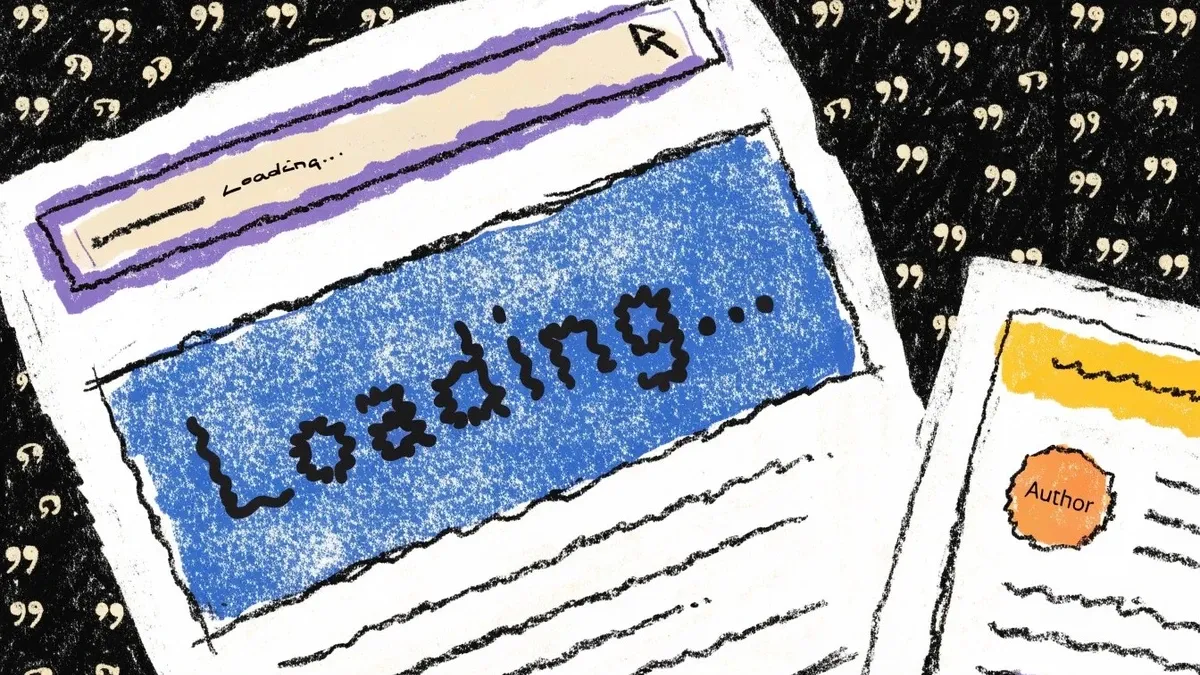
Barry Schwartz just covered three things worth your actual time: the September spam update’s early wobble, reports of loading AI Overviews, and the state of followable Search profiles. Watch it here: https://www.youtube.com/watch?v=lhDSHFI9JMs 🎯
Why I’m writing this: these are the seams where Google reprices organic clicks, and if your CTR model or entity graph isn’t instrumented, you fly blind. I’m translating Barry’s roundup into a short, testable plan you can run this week, no vibes, just segmentation, instrumentation, and entity hardening.

// My reaction
Reaction: facepalm
- Spam update volatility is normal in week oneTriage by section, not sitewide panic. Map losses to templates, intent, and referrer (Search vs Discover).
- “Loading AI Overviews” affects visibility windowsIf the AI box delays, more classic results are seen first. Instrument it and watch CTR shifts.
- Followable profiles raise entity stakesStrengthen author identity, Person schema, and consistent bios across high-signal profiles.
| Signal or symptom | Action this week |
|---|---|
| Section-level losses | Map by template/intent; isolate changes; revert the fluff |
| AI Overview present | Measure presence/timing; update CTR model; test snippet hooks |
| Weak author entity | Ship Person schema; unify bios; add high-signal sameAs links |
Bold action beats speculation. Ship small, measured fixes, then watch by segment—not sitewide screenshots.
Did the September 2026 spam update target a specific niche or tech?
Google labeled it a normal spam update with a global rollout. No niche or tech was named. Expect a ~two‑week rollout with volatility.
Do Search profiles help rankings?
No direct ranking impact. They’re US‑only for now and can amplify Discover exposure for followers who opt in.
Will Google show ads inside AI Overviews?
Yes. Ads can appear above, below, or within the AIO module depending on the query and auction.
Do AI Overviews always reduce clicks?
Results are mixed. Independent studies report lower CTR and more session ends when AIO appears; Google says it still sends billions of clicks and sees higher click “quality.” Treat it as query‑dependent and measure your own set.
- It’s New 9/28: Google spam update early impact, loading AI Overviews, follow Search profiles & more
- Google Search Status Dashboard: September 2026 spam update
- Google tests “Loading” state for AI Overviews (SERoundtable)
- Search profiles “Follow” button desktop toggle (SERoundtable)
- Search profiles eligibility (Google Help)
- Do Search profiles affect ranking? (Google Help)
- About AI Overviews: Gemini + ranking systems (Google PDF)
- AI Overviews expansion to 200+ countries, 40+ languages (Google blog)
- Panel study on AIO effects (arXiv, Aug 2026)
- Wikipedia referral impact from AIO (arXiv, Sep 2026)
- “Billions of clicks” and click quality claims (Google blog)
- Ads placement in AI Overviews (Google Ads Help)
- DataForSEO SERP API pricing example
- Spam update volatility is normal in week oneTriage by section, not sitewide panic. Map losses to templates, intent, and referrer.
- “Loading AI Overviews” changes the attention windowIf the AI box stalls, users see classic results first. Instrument it and watch CTR shifts.
- Followable profiles raise entity stakesStrengthen author identity, Person schema, and consistent bios across high-signal profiles.
What Barry reported this week
- Early chatter and examples of the September 2026 spam update moving rankings. It’s early. Expect reversals and second-order effects. 📉 Per Google’s status dashboard, this rollout began September 24, 2026 at 09:15 PDT, applies globally across all languages, and may take up to two weeks. Incident details. (status.search.google.com)
- Reports of loading AI Overviews in results. That timing matters, users may see classic results first before the AI box renders. 🔎 Google is testing a “Loading…” control in place of “Show more” under AI Overviews. Coverage. (seroundtable.com)
- The Follow button for Search profiles disappeared on desktop but remains on mobile, profiles are US‑only right now and eligibility is tied to follower thresholds. Profiles don’t directly boost rankings, but they can influence what followers see in Discover. SER coverage • Create a Search profile (eligibility + US‑only) • Manage your Search profile (ranking/Discover note) • Add a Search profile badge (Discover effect).
I do not state numbers here because none were provided. Treat these as directional signals, not settled facts.
What to do about the spam update this week
You do not fix volatility with vibes. You fix it with segmentation and proof.
1) Segment the damage by template and intent
- Break out impacted URLs by directory and page type. Product vs article vs category. Commercial vs informational vs local. Do not average the site, the template matters more than your sitewide score.
- Compare losers’ SERP features vs winners. Did you lose featured snippets, FAQs, or review stars, that is a signal, not a mystery. Pull before and after.
2) Separate Search vs Discover traffic
- Discover repricing can look like a penalty. It usually is not the same thing. Separate it in your dashboards and annotate any feed or content card changes on your side.
3) Prune obvious junk and thin appendices
- Kill doorway pages, spun summaries, orphaned tag archives, and pagination dead ends. Keep crawl for content with intent match and demand. If you would not put your name on it, it should not be indexable.
4) Strengthen review and experience signals where it counts
- If you sell or recommend, your review content needs actual criteria, proof of use, and clear authorship. Screenshots, test methods, comparisons, conflict disclosures. Not platitudes.
“Loading AI Overviews” changes the attention clock
If the AI box shows a loading state, users get a beat to scan organic results before the AI answer steals the viewport, so CTR might bump on some queries and drop on others depending on snippet strength and brand.
- Track presence and position of AI Overviews for your head and money terms with the AI Visibility Checker, sample on a schedule and log state changes. 🧰
- Watch branded vs non branded deltas. Brand queries often see different AI behavior than generics, so do not blend them.
- Cross check with the playbook: AI Answers and SEO: Protect Traffic From Clickless Search. Use it to prioritize snippet work and entity support where AI is most aggressive.
Followable Search profiles raise the entity bar
Do not guess whether this matters, assume entity quality compounds into rankings, Discover, and AI answers, then build accordingly.
- Make authors real, full bio page, consistent headshot, a single canonical “About the author” URL used everywhere. Link to high signal profiles like academic pages, GitHub, LinkedIn, or press pages. 🧵
- Mark up Person and Organization cleanly. Validate and expand with the Schema Opportunity Analyzer.
- Align bios with your top topics. If an author writes in B2B data but their bios scream lifestyle blogger, you are confusing Google and users.
- Publishers, cross reference the quick plan for AIO and PAA displacement: AI Overviews Replacing People Also Ask: Quick Publisher Playbook.
| Signal or symptom | Action this week |
|---|---|
| Section-level losses | Map by template and intent, isolate recent changes, revert the fluff |
| AI Overview present | Measure presence and timing, update your CTR model, test snippet hooks |
| Weak author entity | Ship Person schema, unify bios, add high signal sameAs links |
Fast checks you can run today
- Pull a 14 day diff of top losers by directory. Correlate to on site changes shipped in the last month. 📈
- Sample 25 head terms and 25 money terms for AI Overview presence and state. Log the load timing and position.
- Audit your top three authors’ bio consistency across site, LinkedIn, and knowledge eligible sources. Fix mismatches.
- Remove or noindex any page that exists only to catch filler variations. You will not miss it, your crawl budget will thank you.
Bold action beats speculation. Ship small, measured fixes, then watch by segment, not sitewide screenshots.
Takeaway
Early update noise, AI Overview timing, and followable profiles all point at the same truth, entities and extractable proof are doing more work than ever. If you segment impact, instrument AI Overview presence, and harden your author and org entities, you will keep more of the clicks that still exist. That is how I would run it this week, tight loops, clean data, and only changes I can measure. And yes, this loops right back into SEO and GEO and AI practice, structured entities feed AI answers, timing changes reshape CTR, and updates punish weak sections before weak sites. 🙂

// My reaction
