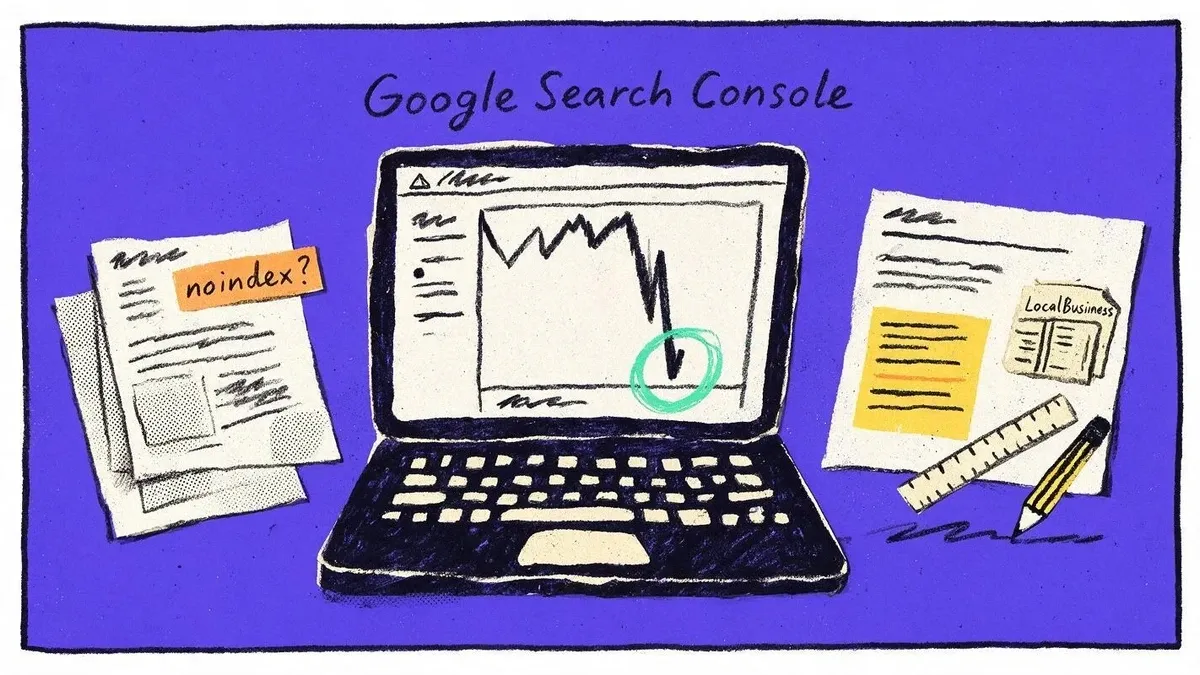
Google’s September 2026 spam update: what’s provable this week, and what to fix first
Edward Sturm just posted “Google’s September 2026 Spam Update Is Here (And It Came With a Secret AI Spam Detector)” and here’s why this is worth talking about: the claim of a hidden AI spam detector would change how operators triage drops and decide what to prune or keep, and if you get this wrong you torch good pages and lose weeks of recovery time. 🚨
I’m not chasing rumors. I’m separating what we can actually verify right now from what’s speculative, and I’m laying out a clean, 7 day triage so you can act without guessing. Short version, interesting claim, but the only thing confirmed is a spam update started rolling out September 24 at 09:15 AM Pacific, it’s global, all languages, and Google says the rollout may take up to two weeks. That alone is enough signal to run a smart hold and fix plan without panic deletes. See Google Search Status Dashboard incident for the official timing. (status.search.google.com)
- Claim vs. proofThe video asserts a new AI spam detector. We don’t have public confirmation. Treat it as a working hypothesis while you verify real signals. 🔎
| Risk pattern | Do this now |
|---|---|
| Programmatic near-dupes | Deindex the worst 20%; consolidate into hubs with real data |
| Affiliate thin reviews | Add evidence blocks (test notes, photos), disclosures, and comparison tables |
| City-page spam | Replace with a geo hub; add permits, crew bios, local proof, and LocalBusiness schema |
| Syndication duplicates | Set canonicals to origin; add provenance lines; consider noindex on mirrors |
Should I delete all AI-written content?
No. Delete junk, not everything. Keep pages with unique data, user value, and engagement. Improve or noindex the rest.
How long to see recovery?
After systemic fixes, partial rebound can begin in weeks, but Google’s docs say automated systems can take months to relearn compliance.
Is this a link-spam update?
No. Google framed this as a general spam update. Treat link tactics separately from scaled or low-value content issues.
- Google Search Status Dashboard: September 2026 Spam Update
- Google’s spam updates and SpamBrain
- Using gen‑AI content: policies and guidance
- Site reputation abuse enforcement update in the EEA (Aug 30, 2026)
- SAFE: Scaled Abuse Forensics Examiner (Google Research, 2026)
- SERoundtable: Two waves in the Sept 2026 spam update
- Search Engine Journal: Fourth spam update in 2026
- Claim vs. proofThe video asserts a new AI spam detector. We don’t have public confirmation. Treat it as a working hypothesis while you verify real signals. 🔎
What the video claims
Edward says the September 2026 spam update includes a secret AI spam detector, implying AI written at scale and low effort pages are getting filtered automatically. He points to fresh visibility drops as proof the update is live and biting.
I’m not saying he’s wrong. I’m saying claims aren’t evidence. Use the claim as a risk lens, then confirm with timing, sections hit, and logs.

// My reaction
Hold judgement — verify first
What we can actually verify
- Timing and scope: Google’s Search Status Dashboard confirms the spam update began Sept 24 at 09:15 AM Pacific, applies globally and to all languages, and may take up to two weeks to complete. Incident details. (status.search.google.com)
- Volatility windows: Industry coverage shows two clear waves so far, Sept 25 to 27, then around Sept 30 to Oct 1. SER: weekend impact, Sept 28 and SER: phase two, Oct 1. (seroundtable.com)
- It’s not novel that Google uses AI for spam: SpamBrain has been in the stack for years. See Google’s own posts: December 2022 link spam update (SpamBrain) and Webspam report 2022. (developers.google.com)
- A 2026 Google Research paper introduced SAFE with “early deployment results,” but there’s no public tie to web Search ranking or this rollout. Google Research: SAFE. (research.google)
- Who’s historically at risk in spam updates: thin affiliate content, templated local pages, programmatic content farms, parasite SEO or site reputation abuse, and expired domain stunts. All covered in Google’s spam policies. Spam policies overview and March 2024 policy additions (expired domain abuse, scaled content abuse, site reputation abuse). (developers.google.com)
- Recoveries take time: Google says improvements can take from days to several months for systems to relearn improvements, especially after broad updates. Core updates guide. (developers.google.com)
If you want the broader operator playbook, start here: Google Spam Update & AI Payouts: What Operators Should Fix Now and the triage split I use: Google September 2026 Spam Update: Is Your Traffic a Penalty or Discover Repricing?.
Your 7 day triage before you delete anything
- Check GSC:
- Manual actions?
- Index coverage and Crawl Stats for discovery surges then pullbacks which often means crawl budget reallocation
- Query or page reports split by brand vs non brand, country, and device
- Segment traffic drops: Brand vs non brand, Discover vs Search, US vs non US, and page type or template. Don’t lump it. 📉
- Inventory obvious risks:
- Programmatic pages with near duplicate paragraphs and swapped entities like cities, SKUs, templates
- AI assisted summaries with no new facts, sources, or firsthand data
- Affiliate or UGC missing value adds, disclosures, and rel=nofollow or ugc
- Syndicated or republished content without canonical alignment
- Parasite SEO placements and expired domain sections riding someone else’s authority. Spam policies. (developers.google.com)
- Crawl and map patterns:
- Group URLs by template. Measure thinness like wording reuse, outbound affiliate density, and ad weight. Kill or quarantine the template, not one page at a time. 🧹
- Log level sanity check:
- Are Googlebot hits thinning on the affected sections
- Any render time or 5xx spikes, any unusual Googlebot Smartphone patterns
- Ad or UX interference:
- Aggressive interstitials, autoplay video, or auto refresh ads can tip borderline sections into low quality flags
If you need help structuring this, book an SEO Audit. I fix section level risk, not one off pages.
What to fix this week without guessing at secret detectors
- Thin programmatic content: Deindex or noindex the worst 20 percent by traffic plus engagement. Merge variants into one canonical hub with real data like prices, specs, inventory, policies, photos, and changelogs.
- Affiliate pages: Add comparison tables, testing notes, return or warranty details, unique images, and disclosures. No coupons as content.
- Templated local pages: If ten city pages read the same, collapse to a geo aware hub with dynamic modules like service radius, crew photos, permits, case studies. Add org and localBusiness schema with real IDs that match off site profiles.
- Syndication: Fix canonicals and add a first published on provenance line. Avoid duplicate feeds that confuse crawlers.
- Structured data quality: Validate entities and attributes so machines can extract them cleanly, and keep it consistent across templates. 🧰
Measurement plan to detect demotion vs Discover repricing
- Segment by surface: Discover volatility is not the same as Search demotion. Use dimension filters. I wrote about this split here: Is your traffic a penalty or Discover repricing?.
- Section level uplift tests: Improve 10 to 20 pages in a hit template. Track impressions and average position delta vs untouched controls for 14 to 21 days.
- Crawl budget and render time: If Googlebot reallocates to stronger sections after cleanup, you’ll see it in logs and Crawl Stats.
How I’d treat the AI spam detector claim
- Use it as a risk lens, not gospel. Assume classifiers are stricter on low information, pattern written text and boilerplate.
- Prioritize original signals like proprietary data, first party photos or videos, experiments, policy details, and outcome metrics that only you can provide.
- Make content extractable with clean headings, explicit claims with citations, consistent entities, and tables for attributes. This helps both Google and LLMs parse you.
- Keep a change log for each section so you can correlate improvements with recovery and you are not guessing which fix moved the needle.
| Risk pattern | Do this now |
|---|---|
| Programmatic near-dupes | Deindex the worst 20%; consolidate into hubs with real data |
| Affiliate thin reviews | Add evidence blocks (test notes, photos), disclosures, and comparison tables |
| City-page spam | Replace with geo hub; add permits, crew bios, local proof, and localBusiness schema |
| Syndication duplicates | Set canonicals to origin; add provenance lines; consider noindex on mirrors |
Should I delete all AI written content?
No. Delete junk, not everything. Keep pages with unique data, user value, and engagement. Improve or noindex the rest.
How long to see recovery?
For spam updates, partial rebound can start within weeks after systemic fixes. Section level improvements help faster than scattered page edits.
Bottom line
Whether or not a new detector shipped, the effect rhymes with prior spam cycles. Low information, pattern generated content and templated bloat get squeezed. Fix sections, not just pages, and measure by surface so you don’t confuse Discover noise for Search demotion. Make your content citeable and extractable so both Google and AI systems can justify recommending you.
Want the deeper technical checklist I use in AI era SEO, with real examples and no fluff, read Technical SEO for AI Search: Keep, Start, Stop Doing. This is where SEO and GEO and AI meet, tight structure plus provable value that machines can parse and humans actually need.
