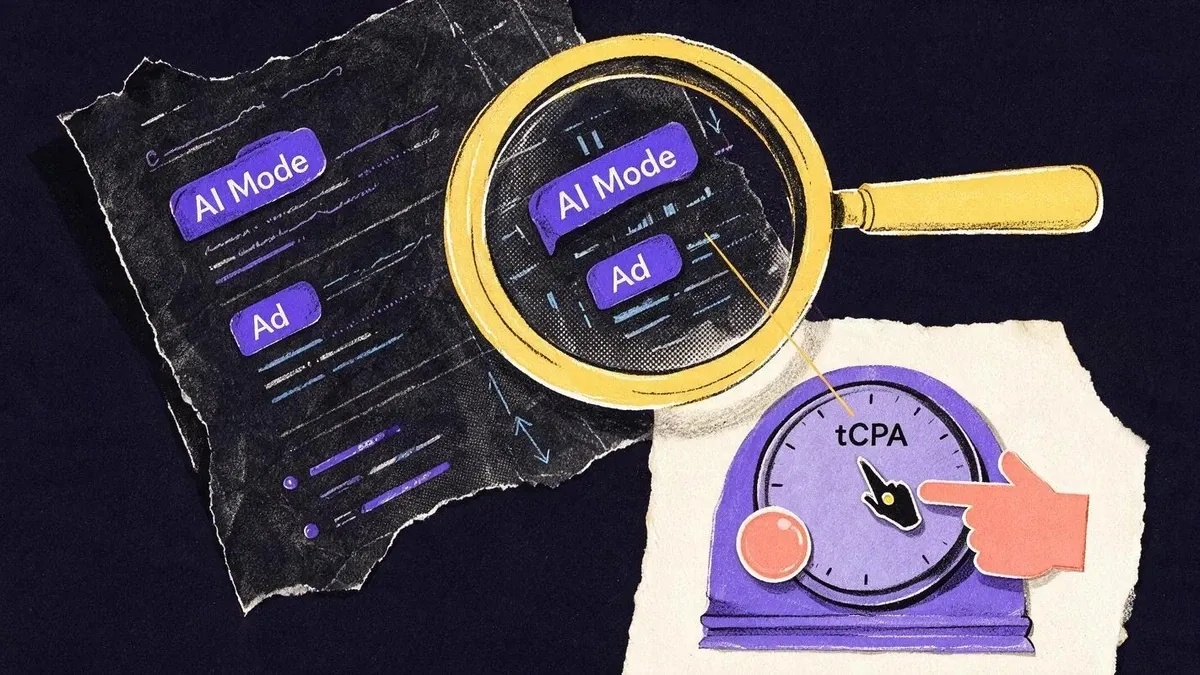
Barry Schwartz dropped his weekly roundup and it’s worth your 8 minutes: “It’s New 9/15: Google volatility, AI Mode text ads, Google Ads bidding update data & ecosystem links” is here: https://www.youtube.com/watch?v=d8zHRRiQjMc. Why I’m flagging it now is simple. Rankings are swinging again, ads are creeping into AI answers, and Smart Bidding behavior shifted on a date that can mess with your targets if you missed the memo 🔎

// My reaction
Reaction: surprised face
I’m not rehashing every rumor. I’m outlining the segmentation, experiments, and model hygiene I’d actually run this week based on Barry’s cues and what we can verify in public docs, so you protect revenue while everyone else argues on Slack.
- Treat volatility as a segmentation problemBreak results down by query intent, device, country, and SERP features before fixing anything.
- Sandbox AI-driven adsUse experiments with hard caps and tight negatives; judge success on incremental conversions after cannibalization checks.
- Audit Smart Bidding inputsRe-check targets vs actuals, add data exclusions for outages, set seasonality adjustments, and screen query quality.
What’s in Barry’s update (and why it matters)
- Ongoing Google ranking volatility with mid September spikes. If you treat a SERP composition shift like a “sitewide quality” issue, you’ll waste a week and make it worse. 📉 See Barry’s note on the September 15 spike: SERoundtable. (seroundtable.com)
- “Ads in AI Mode” are real and expanding. Google is actively testing text link ads inside AI Mode answers (not just above/below). Confirmation and examples: Search Engine Roundtable. (seroundtable.com)
- Smart Bidding changed on Aug 17 for tCPA/tROAS. Budget limited campaigns now behave differently, Google documented scope, rollout, and what to expect: FAQ and help article. (support.google.com)
I’m not speculating on hidden ranking factors or global ad rollout. I’m focusing on what you can prove and control today.
If rankings are swinging, triage like this
- Segment the change hard. Query intent segmentation first (brand, core commercial, top funnel research), then device and country. Add SERP feature mapping for each term: Top Stories, video packs, AI answers, local pack, sitelinks. A feature specific drop points to a format or entity gap, not a global “quality” fail.
- Compare winners vs losers for information gain. Which pages rose, which fell. What did the winners add that yours didn’t, like a faster answer, cleaner H2s, tight definitions, extractable facts, sources. See my page level process here: Google Rankings Drop September 2026: Triage & Fixes.
- Check crawl to index latency. If crawls increased but indexing stalled, fix discoverability (links, sitemaps, canonical noise) before touching content or you’ll make “improvements” zero users see.
- Capture a SERP diff now. Save HTML and screenshots for 10 revenue queries. You’ll need a before and after to validate whether you fixed the right thing.
- Do a quick Google Search Console triage. Page and device split, not sitewide. Mobile only hits are common. Filter by country to isolate GEO swings.
Reference context on the 9/15 volatility spike: SERoundtable coverage. (seroundtable.com)
| Check | Why it matters |
|---|---|
| Query intent split | Prevents broad, wrong fixes |
| SERP feature mapping | Points to format or entity gaps |
| Winner-vs-loser content diff | Surfaces information gain issues |
| GSC by page and device | Finds mobile-only hits missed in aggregate |
If “AI Mode” text ads show up, do this
- Run in an experiment first. Proper A/B or synchronized GEO split. No “just turn it on.” 🧪
- Lock budgets and caps. Daily cap plus CPA or CPL ceilings. No unlimited “learning” while you figure it out.
- Tighten negatives. Protect ambiguous head terms so AI written variants don’t drift into research only queries.
- Freeze a measurement plan. Define success as incremental lift after a cannibalization analysis vs organic for those queries. Report net new conversions, not CTR.
- Keep a human baseline. Keep at least one well performing text ad as the control to spot model collapse into lookalikes.
- Operational notes. You don’t need AI Max to be eligible for AI surfaces, Google confirmed a small experiment allowing exact and phrase match ads from regular Search campaigns to serve inside AI Mode, details and confirmation via Ads Liaison are summarized here: SERoundtable and additional reporting: Paid Media Collective. You can open AI Mode directly: google.com/aimode (availability varies by account or market). Google also discloses “Created or edited with AI” in My Ad Center: Google Ads AI transparency labels and help doc. (seroundtable.com)
Reality check you can cite: SE Ranking’s June 30, 2026 snapshot across 50,032 US commercial terms found text ads in about 29.45% of AI Mode answers, two ads appeared in about 71.1% of those cases, and advertiser domains were cited in the AI answer only about 11.5% of the time (exact URL overlap about 1.95%). Treat as directional, single day snapshot, US only: SE Ranking study and coverage: Search Engine Land, Buffy. (seranking.com)
Also note: Google’s official guidance on ads in AI experiences confirms existing Search or Shopping or PMax or App formats can appear around AI answers (above or below AI Overviews). You’re not required to adopt AI Max to be eligible for those surfaces: Google Ads Help. Separate tests have placed Shopping units and text links inline within AI Mode answers: PPC Land. (support.google.com)
Bidding update data: sanity checks to run
- Targets vs actuals. Pull last 28 vs prior 28 for each campaign’s tCPA or tROAS vs achieved. If variance widened post Aug 17, you likely have signal or budget limit issues. 🧮 See Google’s change log and FAQ: Help, FAQ. (support.google.com)
- Data exclusions. If tracking broke, promos distorted behavior, or ops had outages, set data exclusions so Smart Bidding doesn’t train on garbage.
- Seasonality adjustments. Apply seasonality adjustments for short term promos with atypical CVR to keep the model honest.
- Query quality screen. Export search terms with conversions. Split by New vs Returning. If new customer share is sliding, your automation might be overpaying for repeats.
- Impression share analysis. If impression share climbed while conversions fell, you’re winning the wrong auctions. Pull overlap reports to see who you’re trading with.
- Know the scope. The Aug 17 change applies to target strategies (tCPA or tROAS, plus Target CPC in Demand Gen) across Search or Shopping or PMax or Demand Gen or Travel. Manual CPC and Target Impression Share were not part of this update: FAQ. (support.google.com)
Ship content that AI search will cite
- Make the answer extractable and citeable. Lead with the short, verifiable answer. Then add detail users and AIs can quote cleanly. Start here: Build Content for AI Search: Answer‑First, Citeable, and Extractable.
- Raise information gain, not fluff. Add unique data, steps, or constraints the current top results don’t have. My playbook: Google Rankings Drop September 2026: Triage & Fixes.
- Verify displacement and rebuild. If AI experiences siphon clicks, prove it and chart the recovery plan: AI Search Traffic Loss: How to Prove Displacement and Rebuild Clicks.
Weekly checklist
- GSC and analytics: segment by intent, device, and country, save SERP diffs for 10 money queries. ✅
- Ads: if AI Mode appears, run an experiment with caps and hardened negatives, define incrementality before launch.
- Bidding: review targets vs actuals, add data exclusions for outages, set seasonality for promos, screen search terms for new customer mix.
- Content: ship one answer first page with sources, log owner, hypothesis, and the single metric you expect to move.
Fix the right thing once, not the wrong thing fast.
Do I need AI Max to show ads in AI Mode?
No. Standard Search and Shopping ads are eligible. AI Max and creative tools can help produce variants, but they aren’t required just for eligibility.
If I pay for an ad in AI Mode, will my site be cited in the AI answer?
Not reliably. In one large snapshot, advertiser domains were cited in the AI answer in roughly one out of nine cases. Treat paid placement and citation as separate outcomes.
Is AI Mode ad serving global?
Google frames testing in the U.S. first. Practitioner reports outside the U.S. are inconsistent. Verify in‑account eligibility and live SERPs by market before planning rollouts.
Did the Aug 17 change hit manual CPC or Target Impression Share?
No. The documented change applies to target‑based strategies (tCPA/tROAS). Manual CPC and Target Impression Share weren’t part of that change.
How should I measure success for AI‑generated text ads?
Use incremental conversions after cannibalization checks against organic for the same queries. CTR is not the goal; net new outcomes are.
The takeaway: volatility isn’t a vibe, it’s a segmentation problem. Control the inputs you can intent or device or country splits, experiments with hard caps, clean bidding signals, and answer first pages built for citations and you’ll stabilize traffic now while setting up cleaner wins across SEO, GEO, and AI surfaces. 🎯
- It’s New 9/15: Google volatility, AI Mode text ads, Google Ads bidding update data & ecosystem links (YouTube)
- Google ranking volatility heating up (SERoundtable)
- Google Search ranking update 9/4 reversed 9/13 for some (SERoundtable)
- Google Marketing Live: AI in Search ads formats (Google Ads blog)
- Ads in AI Mode overview and eligibility (Google Ads Help)
- SE Ranking AI Mode Ads Tracker (study of 50,032 US commercial keywords)
- AI Mode access point (google.com/aimode) explainer PDF
- Aug 17, 2026 Smart Bidding update: scope and behavior (Google Ads Help)
- Data on Aug 17 bidding update effects (SERoundtable)
- Google shows “Created or edited with AI” in My Ad Center (Android Central)
- Data strength and measurement updates (Google Ads blog)
